Wednesday, February 25, 2009

Without the Atomic Bomb


This is a Villa-Lobos fragment from 1948 entitled "O Trambolho do Mundo (Sem a Bomba Atômica)". The picture - originally from the Arquivo Historico do Rio Grande do Sul - is reproduced on the back of the liner notes of the CD Musica em torno do Modernismo, from the amazing Caixa Modernista book/kit published by Editora UFMG, Sao Paulo, in 2003.

The subtitle means "Without the Atomic Bomb" - a nice dream in 1948 as it is today. I'm not at all sure what Trambolho means - Google translate doesn't seem to know, and I can't make head or tail of the word in various Portuguese language websites.

You wait here - I'll get help!

My friend Wellington Müller Bujokas to the rescue:

This is a hard word to translate, though the meaning is quite simple. I found the following translations in a dictionary: clog; (fig.) hindrance, impediment, burden; bunch (of keys), but I guess the better is to explain. Trambolho is an object that is big, useless and quite troublesome. Think that there's a huge old washing machine in the center of your living room that neither works nor ever will again, and that is there just because there's no other place to put it. For making it worse, you always stumble in its cable. For sure, you'll call it a trambolho. It's a very informal word and it sounds a little awkward, but it's not vulgar.

Thanks for the help, Wellington!

Monday, February 23, 2009

Tribute to Villa-Lobos at the New England Conservatory

The March 1st concert at the New England Conservatory includes a number of interesting items. First of all, for those of you in the Boston area who missed the two performances last week of the 2nd Cello Concerto by Andres Diaz and the Symphony Pro Musica, you'll have another chance on the first, at Jordan Hall. As well, there are lots of other works to be heard, among them Choros #01, Bachianas #5, and, according to the NEC press release, "several choral pieces that [NEC Preparatory School pianist Tatyana] Dudochkin found in the Villa-Lobos Museum that have never been published."

Saturday, February 21, 2009

Dia da Música Clássica on Rádio MEC FM

The Dia Nacional da Música Clássica is coming soon; it's March 5th, which is Villa-Lobos's birthday.

This year, Rádio MEC FM will be celebrating by broadcasting live for three hours, direct from the Museu Villa-Lobos. Thanks to the Portal VivaMúsica website for this information. Listen here, on Thursday, March 5th, from 11 a.m. to 2 p.m., Rio de Janeiro time, which is UTC minus 3 hours. That's 7 to 10 a.m. MST here in Red Deer.

Friday, February 20, 2009

Villa-Lobos Around the World

I'm adding Villa-Lobos concerts this year at a faster rate than I ever have. As usual, they come from all around the world. Here are the most popular places (out of 550 separate locations) for concerts from 1999 to 2010:

Rio de Janeiro - 191
São Paulo - 77
New York - 35
Paris - 19
London - 19
Berlin - 13
Belo Horizonte - 12
Porto - 11
Boston - 11
Montreal - 10
Richmond VA - 9
Vancouver - 8
Curitiba - 8
Los Angeles - 7
Washington DC - 7

From Croydon to Red Deer to Ho Chi Minh City, everyone is playing and listening to Villa-Lobos! If there's a concert I've missed, let me know.

Theme Country: Brazil


Each year the Casa da Música in Porto, Portugal names a Theme Country for its musical program. This year it's Brazil, and in the Ano Villa-Lobos, there's lots of music by Villa-Lobos. There are rarities like the orchestral version of New York Skyline, the Fantasia for Cello & Orchestra (which surely deserves much more exposure, especially played by António Meneses), Uirapuru, Choros #06 & #09 (on the same programme!), and the choral version of BB#9. Along with three other Bachianas Brasileiras (#2, #4, and #5), and some chamber works, the Orquestra Nacional do Porto does well by Villa-Lobos this year!

Thursday, February 19, 2009

Villa-Lobos & Tom Jobim in Nagoya


Here's a cool story from Jornal IPC (a portal for news from Japan in Portuguese and Spanish): pianist Marcelo Bratke presents Villa-Lobos and Tom Jobim to school children in Nagoya.

Wednesday, February 18, 2009

Anthropophagism

"A cannibalism scene, by Montanus: signed on year 374 of Bishop Sardinha’s murder, in allusion to the practice of cannibalism, which seduced chronic writers and voyagers of past centuries, the Anthropophagic Manifesto proposes the devouring, without guilt, of all assets of the European civilization." (12.5 x 16 cm) engraving, 1671 from the Map collection of the Ministry of External Relations.

This from the Ministry's excellent Art and Culture website, Anthropophagism, by Walnice Nogueira Galvão. The Anthropophagic Manifesto by Oswald de Andrade (1890-1954) was a key document of Brazilian Modernism, and helped Villa-Lobos to develop his aesthetic of modernism, "indianism", and nationalism. Oswald de Andrade is a key member of the group who arranged the Semana de Arte Moderna in Sao Paulo in 1922; Villa-Lobos was the most important musical participant.

"I asked a man what Law was. He told me it was the guarantee of the practice of the possible. This man was called Galli Matias. I ate him (...)"

It all happened 87 years ago: February 11th to the 18th. In the early 1920s Villa-Lobos was busy devouring, without guilt, all the avant-garde music of Paris. Is Villa the most guilt-free of composers?

Tuesday, February 17, 2009

The Instruments of Ruda


In 1951 Villa-Lobos wrote one of his very strong late-period orchestral works, a ballet score written for La Scala called Ruda, subtitled The God of Love. There's only one recording of this work that I know of, the 1996 Marco Polo disc that includes Ruda and the Sixth Symphony, played by the Slovak Radio Symphony Orchestra, conducted by Roberto Duarte.

In the last few days I've really been enjoying reading Villa-Lobos reviews in the brand-new Gramophone Archive. The reviews written by Lionel Salter from the 1950s through to the late 1990s are especially insightful. Reading a bunch of these reviews in a row is like a critical master class in the music of Villa-Lobos; Salter really knows his stuff. That's especially impressive when you consider the lack of context Salter had available in the earlier years: today's reference works, recordings, and scores weren't available at the time. Salter would have been lucky to have heard three of the symphonies in the late 1990s; we can now easily listen to all of the surviving works, and a few in multiple recordings.

As it happens, L.S.'s review of the Marco Polo disc is quite negative regarding the Sixth Symphony. But he absolutely loves Ruda. The "God of Love" theme, according to Salter,

"... was right up Villa-Lobos's street, affording him boundless opportunities for compulsive rhythms, misterioso passages, lushly lyric episodes (there is one in the Inca movement and another, somewhat Ravelian, for the Mayas), exotic melodic lines and, in places, wonderfully original instrumentation."

At this point in the review Salter has an interesting aside: "I believe the score includes a part for the Sonovox, but I was unable to detect it in the general melee."

Villa-Lobos's interest in out-of-the-way and especially in new technology instruments is well known. I've written about Villa's early use of the prepared piano, and, in Amazonas (1917), the use of the violinophone and the sarrusophone. The score for Ruda (the autograph of which is in the Museu Villa-Lobos) includes a part for the "solovox".

What is the solovox? Might it be the Hammond Solovox which according to this site was manufactured starting in 1940? This early electronic instrument is shown in this picture: "The Hammond Solovox consisted of a keyboard and a "tone cabinet" (speaker/amplifier/tone generator)."


Or is Villa-Lobos writing for a Sonovox, an electrified "talk box" which amplified the sounds made from a pickup placed right on the throat. Think about the sounds from 1940s Disney films: the "All Aboard! Let's Go!" sound in the Casey Jr. segment from Dumbo, and the interesting sounds in The Reluctant Dragon (both from 1941).


This is an interesting possibility, since at the time Villa-Lobos was hanging out with Disney's animators who were in Brazil working on their Good Neighbor masterpieces Saludos Amigos (1942) and The Three Caballeros (1944). At the same time, Walt himself was considering the Little Train of the Caipira movement of Bachianas Brasileiras as a scene in 1940's Fantasia - a fascinating might-have-been. Is Villa-Lobos picking up new techology tips from Hollywood?

A peek at the Ruda score would help; I'll listen very carefully to Ruda with headphones to see if I can hear anything myself. Go to this page on Ruda for more about this interesting work.

Monday, February 16, 2009

Symphony Pro Musica

Symphony Pro Musica has been performing in MetroWest Boston for 25 years. Their March 14 and March 15 concerts include two major Villa-Lobos works that are finally breaking through into concert programmes around the world.

The 2nd Cello Concerto is a late work, written in 1953 for Aldo Parisot. Like the other commissioned concertos from this period (for Harmonica, Harp, and Guitar, at least, if not all of those for piano), this work is very strong: accessible and completely typical.

Dawn in the Tropical Forest (Alvorada Na Floresta Tropical) was written in the following year, on commission from the Louisville Orchestra. This work and the other tone poems and ballets represent the third most important group of Villa's orchestral works, after the Choros and Bachianas Brasileiras, and before the Symphonies. It's great to see them programmed by American orchestras in this Ano Villa-Lobos.

Thursday, February 12, 2009

Nuts about Music in Brazil

Thanks to the brand-new, and very amazing, Gramophone Archive site, I can link to the full-text of the January 2007 article "Nuts about Music in Brazil", by Phillip Clark. With John Neschling unexpectedly gone, it's sad to read about the "swift rise of an orchestra poised to join the A-list."

Neschling is interesting, and insightful, when it comes to Villa-Lobos:

"He was a giant personality who gained tremendous power.... People have often mistaken his innovative orchestration for bad orchestration. It's like cutting thick hair; you really have to get inside to find where all the strands lead. Sometimes it's necessary to rethink his dynamics, but the soundworld is really like no other."

The Gramophone Archive really is something. Naturally, my first impulse was to search for "Villa-Lobos". The result was 1058 hits, which isn't that many when you consider that each review from 1920 to the present is included in this great resource. It's actually really close to one mention per issue: the archive opened with 1023 issues!

Did I mention it was free? Kudos to this great magazine for opening up this information to the world!

Villa-Lobos in the Weirdest Places


The first in a (perhaps) ongoing series. This is from the Brazilian mini-series Hoje é Dia de Maria, and features Rodrigo Santoro and Letícia Sabatella. There's probably a reason that guy is in a cage...

Oh, right, the song. It's from Forest of the Amazon.

One last thought: Baz Luhrmann could remake this with Nicole Kidman and Hugh Jackman.

Another controversy in Brazil


Following on the heels of the John Neschling dismissal from Osesp comes news of the cancellation of Fabio Zanon's long-running Cultura FM series “O Violão Brasileiro” - The Brazilian Guitar. This is really unfortunate, since there were important shows still to come in Zanon's series.

The entire series is archived at the VIOLÃO com Fábio Zanon blog. A large subset (#14-115) is in MP3 here. This includes #53 Heitor Villa-Lobos, and #55 Heitor Villa-Lobos II. Other individual shows - including #130 Heitor Villa-Lobos III - are available in 64K Windows Media format, which sound fine but won't, of course, play on my iPhone or iPod.

Even if you can't understand Zanon's commentary, you can learn something about Villa's guitar music just by looking at his playlist selection. When he features the Preludes in #55, for example, he chooses Andrès Segovia for #1 and #3, and Julian Bream for #2, #4, and #5. The Etudes are divided between Marcelo Kayath, Manuel Barrueco, Everton Gloeden, Paulo Pedrassoli, and Fábio Zanon himself. And, of course, the music speaks for itself. The blog helpfully adds timings for each item in the shows' playlists.

Too bad about the budget-cutting at Rádio Cultura FM de São Paulo. When considering Zanon's and Neschlings' recent problems, some might look back to Villa-Lobos's many fights and bad feelings with the cultural establishment in Brazil. But I don't know enough about the issues to weigh in on the controversy itself. I'm just glad that these 160 shows are still available to listen to on the web.

Tuesday, February 10, 2009

Orquestra Filarmônica de Minas Gerais


Brazilian orchestras are now announcing their 2009 season programs. The Orquestra Filarmônica de Minas Gerais in Belo Horizonte has a full slate of Villa-Lobos works coming up in the Ano Villa-Lobos, including:
  • Bachianas Brasileiras #7 in March
  • Bachianas Brasileiras #9 in June
  • A Floresta do Amazonas in July
  • Bachianas Brasileiras #3 (with Cristina Ortiz) and Choros #06 in August
  • The Guitar Concerto (with Fabio Zanon) in September
  • Uirapuru in November
That's a pretty good cross-section of Villa-Lobos's greatest music, with some world class soloists under the direction of Isaac Karabtchevsky, Ira Levin, and Music Director Fabio Mechetti.

Friday, February 6, 2009

Carmen Miranda Centennial

Daniella Thompson reminds us that 2009 - the Ano Villa-Lobos - is also Carmen Miranda's Centennial year. The actual date is Monday, February 9. It's interesting that her father José Maria Pinto Cunha was born in 1887 - the same year as Villa-Lobos.

So maybe Villa looked at Carmen Miranda as a daughter; certainly his admiration for her was boundless:

"Carmen Miranda carried her country in her luggage, and taught people who had no idea of our existence to adore our music and our rhythm. Brazil will always have an unpayable debt to Carmen Miranda."

- Villa Lobos, quoted in "Carmen Miranda: The High Price of Fame & Bananas," in Latina Legacies: Identity, Biography, and Community, Vicki L. Ruiz, p. 193.

Lots of websites out there about Carmen Miranda, but your best bet is to pop a DVD in the player, and enjoy!

OSB in 2009


The Orquestra Sinfônica Brasileira website now has the 2009 Season up, and it's clear that Music Director Roberto Minczuk (above) is taking the Ano Villa-Lobos very seriously. There are a couple of very important concerts to highlight, with works very rarely performed.

Gênesis is the featured work at three concerts from April 3, 4, and 5, and Amazonas is on the bill on the 22nd and 23rd of May. Other Villa-Lobos works this year include BB#8 and Momoprecoce with pianist Jose Feghali.

There's more information at the really excellent OSB website.

Villa-Lobos Documentary footage


This is really amazing - 10 minutes from a documentary on Villa-Lobos, with some great footage of Villa-Lobos home movies. Even though I can't understand the bulk of what's being said, it's nice to see Villa on video with Mindinha and other friends. Villa is as charming and self-confident as one imagined - I don't think I've ever seen someone as comfortable with himself and his world.


Nice also to see the late Anna Stella Schic, and Walter Burle Marx, Marlos Nobre, Turibio Santos, and Cesar Guerra Peixa. Also, it's great to see and hear Pixinguinha's choroes play "Cardinhoso".

Wednesday, February 4, 2009

Valentine's Day Guitar at Gloria Ferrer Champagne Caves


O vinho é coisa santa
Que nasce da cepa torta
A uns faz perder o tino
A outros errar a porta

Quando o vinho desce
As palavras sobem
As a former wine professional, I'm always on the look-out for a wine connection with Villa-Lobos. Here's one, and a romantic one at that: a Valentine's Day guitar concert with Eric Symons at the Gloria Ferrer Champagne Cellars in Sonoma.

[Don't miss Eric's comment, below.]


The Portuguese toast above is a traditional one. Here's the translation:

Wine is a holy thing
Born from the crooked grapevine
It makes some lose their mind
It makes others miss their door

When wine goes down
Words climb up
Words and music... Thanks to this cool exchange on the Wordreference forum for this.

Tuesday, February 3, 2009

Villa-Lobos on Cultura FM: February 2009

Here are Villa-Lobos performances upcoming on Cultura FM from Sao Paulo. Listen here on the Internet. Times are local Sao Paulo times, one hour ahead of EST. Check out the live concert from the OSESP on the 14th.

February 7, 2009
10:00 CIRANDA - Academia Brasileira de Música:
Choros de Heitor VILLA-LOBOS.

February 12, 2009
13:00 DELICATESSEN com Kika Leoi:
Percy GRAINGER - Jutish Medley. Marc-André Hamelin (piano). / Benjamin GODARD - Sonata para violoncelo e piano em ré menor Op.104. Mats Lidström (violoncelo). Bengt Forsberg (piano). / Heitor VILLA-LOBOS - Choros n°1: Roland Dyens (violão). Ensemble Instrumental Jean-Walter Audoli. Reg.: Jean-Walter Audoli. / Johann Heinrich SCHMELZER - Sonata unarum fidium IV. Romanesca.

February 14, 2009
10:00 CIRANDA - Academia Brasileira de Música:
Choros de Heitor VILLA-LOBOS.

February 19, 2009
13:00 DELICATESSEN com Kika Leoi:
Heitor VILLA-LOBOS - Três Cirandas. Pro Arte Guitar Trio. / Johann Sebastian BACH - Sonata n°5 em Fá menor BWV 1018. Péter Csaba (violino). Zoltán Kocsis (piano). / Robert SCHUMANN - Concerto para violino e orquestra em lá menor Op.129. Christophe Coin (violoncelo). Orquestra de Champs Elysées. Reg,: Philippe Herreweghe.

February 21, 2009
10:00 CIRANDA - Academia Brasileira de Música:
Choros de Heitor VILLA-LOBOS.

February 25, 2009
15:00 TARDE CULTURA - Música e Notícia com Sérgio Roberto Ribeiro:
Entre outras obras, de Heitor VILLA LOBOS, Bachianas n.6 com Antonio Carrasqueira (flauta), Aloísio Fagerlande (fagote), de Nino ROTA, Concerto para Cordas. I Musici e de Francesco GEMINIANI, Concerto Grosso em sol menor, op. 3 n° 2. Academia de Música Antiga de Cambridge. Dir.: Christopher Hogwood.

February 28, 2009
10:00 CIRANDA - Academia Brasileira de Música:
Choros de Heitor VILLA-LOBOS.

More from Osesp

I updated the last of my recent posts on the departure of John Neschling from the Orquestra Sinfônica do Estado de São Paulo (Osesp) with a new Comment, but there's enough meat in the new story to justify another post.

This story from Veja São Paulo lets us know that Yan Pascal Tortelier has replaced Neschling at the head of the orchestra (as both conductor and music director). The story talks about Tortelier's very strong resume, leading the BBC Philharmonic and as principle guest conductor in Pittsburgh.

But there are also less positive comments, including this from Le Monde's Alain Lompech:

"Neschling fez reviver obras essenciais do patrimônio musical brasileiro.... Tortelier não tem esse conhecimento, e, neste momento cultural do país, dar continuidade ao trabalho de memória é crucial."


Google-translated, that's

"Neschling was essential to revive works Brazilian musical heritage.... Tortelier has no such knowledge, and now the country's cultural, continuing the work of memory is crucial."


On the other hand, there have been very positive comments about Tortelier - including from Osesp musicians, who complained of bad treatment from Neschling. I've seen lots of stories like this about bad feelings after a conductor leaves (or a hockey player is traded), and they all seem to follow a similar pattern.

This entire controversy is probably more about live concerts in Brazil than about recordings. There is no question that Neschlings' recent recordings with Osesp for BIS are absolutely first-rate: easily the best Choros series. So it's a bit disappointing to see that

"Duas gravações de CDs de Neschling à frente da Osesp marcadas para este mês com a gravadora sueca Bis foram adiadas e ainda não têm data para acontecer." - ("Two CDs of recordings of Neschling ahead of Osesp scheduled for this month with the Swedish label Bis were postponed and not have time to happen.")


I'm not sure if that means that upcoming recordings for BIS were cancelled, or if the upcoming release of previously recorded discs was postponed. I'm hoping for the latter. There are plenty of under-recorded orchestral gems out there that need the full BIS-Neschling-Osesp treatment.

News about Villa-Lobos Scores

This story in the Brazilian magazine Concerto by Ricardo Tacuchian (the composer who is also the current president of the Academia Brasileira de Música) came to my attention thanks to my friend Wellington Müller Bujokas:

http://www.concerto.com.br/contraponto.asp?id=148


Here is Wellington's translation:

“The Brazilian Academy of Music (ABM) has conquered, in 2008, a great victory for the national culture. Many of Villa-Lobos’ works were attached to publishing contracts with Max Eschig. Some of these editions presented mistakes or were hired in bad-quality handwritten copies. This fact discouraged some artists and orchestras to program the master’s works. Furthermore, the Brazilian performer, in order to program Villa-Lobos’ music, depended on the hire charged by the foreign publisher which had no interest in doing new editions. Through its copyright bureau, ABM has gotten an agreement with the French publisher, benefiting both parts.

"ABM will offer, gratuitously to the publisher, new editions revised by the greatest authorities and specialist in the composer’s work. Due to their musicological rigor and graphical quality, these editions will substitute the old ones. On the other hand, ABM will acquire performance rights for the whole Latin America.

"This agreement, currently, covers a partial number of Villa-Lobos’ works, but it will be expanded in so far as we rise resources to edit all the pieces that were contracted by the author during his life. This way, we will encourage the diffusion of Villa-Lobos’ work, collecting 100% of copyrights of performances in the Latin America and reducing the cost of purchase and hire in Brazil. As if it was not enough, we will get back for our nation an invaluable spiritual heritage. We hope we will be able, in the next year, to inform that new pieces of the carioca composer will be in this program of recovering of our cultural inheritance, including also
the American publishing houses that own the referred copyright. We are currently working for this.

"We must emphasize that, independently of the project above, ABM’s Bank of Scores keeps its project of editing all the works by Villa-Lobos that were not yielded to commercial publishers. This is the case of the Forest of Amazon, whose copyright for the whole world belongs integrally to ABM and that is turning out to be a champion of live performances and recordings.”


Thanks, Wellington, for your work on this. We've heard rumours of this coming, but it seems to be a more comprehensive project than I had thought.

The copyright situation is complicated by the fact that in 2010, the music of Villa-Lobos goes into the public domain in those countries (Canada being one; Portugal is another) who use the death +50 years rule. There is lots more on music copyright issues at the Internet Music Score Library Project.

Sunday, February 1, 2009

Anna Stella Schic


Sad news from France
: the pianist and scholar Anna Stella Schic has died in Paris at the age of 83. Schic, who was a close friend of Villa-Lobos and Mindinha during their stay in Paris in the 1950s, leaves two important Villa-Lobos projects. The first is her book Villa-Lobos: Souvenirs d'un Indien blanc, and the second is her landmark recording of the complete piano music of Villa-Lobos.

Friday, January 30, 2009


This is really, really cool: the Carnaval de Campos do Jordão yesterday announced the theme for this year's Carnaval street day on February 24th. In this Ano Villa-Lobos, celebrating the 50th anniversary of Villa's death, the theme will be the works of Villa-Lobos. Six Samba Schools will be in the parade this year, each with a special Villa-Lobos theme:

  • Jardim Márcia - “Uma homenagem a Villa-Lobos”
  • Jardim Imperial - “Uirapuru”
  • Vila Santo Antônio - “Bachianas”
  • Bloco dos Artistas (Vila Britânia) - “Choro”
  • Acadêmicos do Britador - “Amazônia Fauna”
  • Vai-Vai da Mantiqueira (Monte Carlo) - “O Trenzinho do Caipira”
I can't think what a comparable popular culture event in Europe would be to celebrate this year's Haydn or Schumann anniversaries.

More information at the Guiacampos website.

Thursday, January 29, 2009

Antropofagia Musical

In connection with their new exhibit of art by the great Brazilian modernist painter Tarsila do Amaral, the Fundación Juan March in Madrid is presenting an important musical series entitled "Antropofagia Musical: Tres conciertos con motivo de la exposición Tarsila do Amaral." The three concerts take place on February 6, 11 and 18, 2009.

Oswald de Andrade was, with Tarsila do Amaral and others, a founder of the Brazilian modernist movement. His 1928 Manifesto Antropófago (Cannibal Manifesto) set out the major themes of the modernist agenda. The connection between de Andrade and Villa-Lobos was the latter's involvement in the Semana de Arte Moderna in Sao Paulo in 1923. Villa's modernism, forged in Paris in the 1920s, was the musical highlight of the week, and the performances of his music were the cause of much controversy. Controversy, of course, is the manifesto-writer's dearest wish.

The Antropofagia Musical series thus provides Villa-Lobos pride of place in the programs of the three concerts. On February 6, the featured works are Quinteto en forma de chôros (1928) and Chôros nº 3 (1925 - dedicated to Tarsila do Amaral). Three Villa-Lobos works are included in the February 11th concert, including the late Quintet instrumental (1957). The final concert on February 18th includes various vocal and solo piano works including Suite floral, portions of which were actually played (to the consternation of some audience members) during the Semana.

One of the great things about this series is that those of us outside of Madrid will have a chance to hear these concerts. They're being broadcast live on Radio Clásica, from Radio Nacional de España.

Both of the the excellent but short Wikipedia articles on Oswald de Andrade and Tarsila do Amaral feature a portrait of the former by the latter, noting that the image is copyrighted and unlicensed. Rather than posting it here, I will direct you to the superb site Tarsila do Amaral, which includes a large gallery of images, and lots of background and history relating to this great artist's work.

Instead I offer this image of a poster from February 17, 1922 (87 years before the upcoming series in Madrid) from the Semana de Arte. This is copyright Museu Villa-Lobos, who incidentally allow all of their images to be reproduced for non-commercial use, provided credit is given to the Museum.

Tuesday, January 27, 2009

John Neschling's Departure

There's more fall-out from the announcement of John Neschling's departure from the Orquestra Sinfônica do Estado de São Paulo (Osesp). French critic Alain Lompech from Le Monde provides an absolute rave review of Neschling's legacy as conductor and (especially) as music director in São Paulo, comparing his orchestral development to that of George Szell in Cleveland and Simon Rattle in Birmingham. He concludes:

Daqui a 20 anos, daqui a 50 anos, o nome de John Neschling será conhecido como o de um músico que realizou um trabalho excepcional no Brasil, o mais excepcional desde Villa-Lobos.

If I understand this correctly, Lompech guesses that in the future when one thinks of musical development in Brazil, Neschling's name will come only after Villa-Lobos's. That is high praise indeed!

Villa-Lobos on the web: the dark side

Most of my connections as the "antenna of the Villa-Lobos blogosphere" (see the previous post) are very positive. I might find out about an awesome new recording of Villa's music, or another endearing anecdote from his life.

But every once in a while I come across a less than flattering reference to Villa-Lobos. In this case it's a whole series of less than flattering references, from Leandro Vieira's blog. His recent references to Villa-Lobos are here (and the Google machine translations into English, here).

Here's a representative sample, referring to Bachianas Brasileiras #5, a piece normally greeted with awe and adoration:

Oh coisa feia.
Vocálise insuportável.

or, according to Google Translate:

Oh ugly thing.
Vocálise unbearable.

All this is in the context of "A música erudita brasileira é um desastre" ("Brazilian classical music is a disaster"). Recently there have been some posts where Vieira responds to his predictably angry commenters who stick up for Villa-Lobos, a national icon as well as a composer.

Google Translate can give you a sense of a blog post in Portuguese, but I suspect that all the subtlety is missing. I get the feeling that Vieira's posts might have a mocking sub-text, but the first casualty of machine translation is probably humour. At the very least, he seems to be deliberately provocative, especially since he's launched his strongest missives into the blogosphere during the Ano Villa-Lobos. Considering Villa's rapidly rising reputation, both in Brazil and around the world, Vieira is rowing against the current. And in Brazil, the current of the Amazon is strong!

I'll keep an eye on this site!

Audições Brasileiras - blog-clipping

I had this comment posted yesterday:

Carlos Eduardo Amaral said...

Hi, Dean. I noticed today that my blog is in your list. Thank you for the kindness and I'm free for whatever you want to know here in Brazil (particularly in North-Eastern Region).

Best Regards.

Carlos's blog is Audições Brasileiras - blog-clipping. You can see the latest post from this exceptional resource in the right-hand column, under the heading "My Blog List". For someone like me with hardly any Portuguese language skills, it's great to have a single source for the latest news about classical music in Brazil.

Complimentary loops are are a staple of the blogging world, so I'll quote one of Carlos's posts about my own blog here:

"O blog do canadense Dean Frey é o mais antenado da blogosfera no que se refere a Villa-Lobos."

Monday, January 26, 2009

Cuarteto Degani plays Villa-Lobos's First Quartet

The Spanish string quartet Cuarteto Degani plays the second movement of String Quartet #1:


Links to the other movements are at the Cuarteto Degani's website.

Sunday, January 25, 2009

Cello Concerto #1

The first cello concerto was written in 1913 (or 1915 - there's some confusion about this). Here is a fairly old performance by William Molina Cestari. Enrique Arturo Diemecke conducts the Orquesta Sinfónica "Simón Bolívar". This performance at the Teatro Teresa Carreño, Sala Rios Reyna, is from 27-06-1995.


Here are the other video files: part II, part III, part IV.

New String Quartet recording

This brand new CD from the Quarteto Radamés Gnattali includes Villa-Lobos's sixth string quartet, and quartets by Gnattali, Santoro, and Guarnieri. I first heard about this disc last June, when there was a notice of a concert and CD launch in Sao Paulo. I'll go looking on the web for an online source to buy this CD, published by Selo Radio MEC.

Wednesday, January 21, 2009

Changes at Osesp


This somewhat puzzling news comes from Brazil: John Neschling is leaving his post as artistic director of the Orquestra Sinfônica do Estado de São Paulo (Osesp). Neschling has been one of the top Villa-Lobos stars on CD in the past few years, especially with his complete Choros series on BIS. Orchestra politics, as always, are a mystery to me. Let's hope, though, that the orchestra's future is as positive as its last 12 years has been under Neschling's leadership.

If you're in
São Paulo later this year, check out Neschling & Osesp's performances of the rarely performed Choros #09.

Tuesday, January 20, 2009

Dia Nacional da Música Clássica

Brazilian president Lula da Silva once again declares March 5 National Classical Music Day:

Presidência da República
Casa Civil
Subchefia para Assuntos Jurídicos
DECRETO DE 13 DE JANEIRO DE 2009.

Institui o Dia Nacional da Música Clássica.

O PRESIDENTE DA REPÚBLICA, no uso da atribuição que lhe confere o art. 84, inciso VI, alínea “a”, da Constituição,

DECRETA:
Art. 1o Fica instituído o dia 5 de março como o Dia Nacional da Música Clássica.
Art. 2o Este Decreto entra em vigor na data de sua publicação.
Brasília, 13 de janeiro de 2009; 188o da Independência e 121o da República.

LUIZ INÁCIO LULA DA SILVA
Alfredo Manevy de Pereira Mendes


March 5th is, of course, Villa-Lobos's birthday.

Sunday, January 18, 2009


A 1956 portrait of the composer from Studio Harcourt in Paris, from Europeana, the digital library of the European community. © Ministère de la Culture - Médiathèque du Patrimoine, Dist. RMN - Studio Harcourt.

Monday, January 12, 2009

Broadcasts from Danish & Canadian Radio

Set your alarm for these broadcasts on BBC Radio 3's Euroclassic Notturno:

26 January 2009
05:00AM
Villa-Lobos, Heitor (1887-1959)
Kyrie and Gloria from 'Missa São Sebastião'
Danish National Girls Choir, Michael Bojesen (conductor) [recorded on 28th March 2004 at the Holmen Church, Copenhagen]
DKDR

30 January 2009
05:26AM
Villa-Lobos, Heitor (1887-1959)
Bachiana brasileira no.5 vers. for soprano & cellos [1. Aria (Cantilena); 2. Dansa (Martelo)]
Isabel Bayrakdarian (soprano), Bryan Epperson, Maurizio Baccante, Roman Borys, Simon Fryer, David Hetherington, Roberta Jansen, Paul Widner, Thomas Wiebe, Winona Zelenka (cellos) [recorded at the Glenn Gould Studio CBC centre, Toronto in September 2001]
CACBC

Or better yet, you'll be able to listen on the BBC iPlayer for 7 days after the broadcasts.

100 Greatest Musicans in Brazil


I've seen more than a few online discussions of this Rolling Stone Brasil cover story about Brazil's 100 greatest musicians, and though I miss a lot when I Google-translate the Portuguese, it's clear that music-mad Brazilians take this kind of thing pretty seriously. Here's the complete list from an excellent music blog I've recently discovered - Vermute com Amendoim (great name: "Vermouth with Peanuts").

Tom Jobim: #1 - no problem there. But here's the rub: Heitor Villa-Lobos clocks in at #23. Some angst about that in Brazil's blogosphere!

But no matter how they're ordered, this list demonstrates the greatness of Brazil as a musical country.

O Trenzinho do Caipira


O Trenzinho do Caipira: Projeto Villa-Lobos is a children's theatre project "para Crianças de Todas as Idades" - for children of all ages. Check out their blog for pictures, video, and stories about their many awards.

Thursday, January 8, 2009

Choros #10 on New Year's Eve

From a gala New Year's Eve concert with the Orquestra Sinfônica do Estado de São Paulo, John Neschling conducts Choros #10.


Part II is here.

VL Concerts in 2009

I came across this story at the Audições Brasileiras blog; it's by Irineu Franco Perpetuo, from Folha de S.Paulo. It's about the 2009 celebrations connected to the 50th anniversary of Villa-Lobos's death. It mentions Friday's concert by Luis Carlos de Moura Castro in Rio, and many others around the world, from now to December. Watch out for new concerts at the Villa-Lobos Concerts Calendar. I'll make sure all of the concerts in this article are there; there's bound to be something coming soon to a concert or recital venue near you. It promises to be another banner year.

Besides the concerts, some publishing projects are highlighted, including new DVDs from Marcelo Bratke and the Sinfônica do Teatro da Paz in Belém. Also a new book by guitarist Fabio Zanon "Folha Explica Villa-Lobos", and a four-volume anthology of "Guia Prático" from the Academia Brasileira de Música.

Tuesday, January 6, 2009

Wayne Shorter's Alegria


Wayne Shorter's 2003 Grammy Award-winning jazz album Alegria includes my favourite arrangement (by Robert Sadin) of Bachianas Brasileiras #5 (my second favourite is Branford Marsalis's version on his Romances for Saxophone album). I wanted to feature this amazing album, since I've been listening to it lately, and also reading Michelle Mercer's excellent 2007 book Footprints: the life and work of Wayne Shorter. Mercer has this to say about the Bachianas performance:

On his version of the Heitor Villa-Lobos composition "Bachianas Brasileiras No. 5" a plucked cello chorus and layered Brazilian rhythms combined into a luxurious Baroque. Wayne's practice sessions with Coltrane on string exercises paid off in his saxophone solo, the tone of which showed an uncanny empathy for the cellos' delicate strength; like his work with Milton Nascimento, the Brazilian piece brought out Wayne's romantic side.
(p. 266). Mercer points out at another place in the book that Milton Nascimento's mother was a musician who played with Villa-Lobos - I'm not sure in what context, but I'll see if I can find out. I'm also anxious to listen again to Shorter's collaboration with Nascimento (1974's Native Dancer, for example).

Very highly recommended music, and book.

Wayne Shorter has another Villa-Lobos connection, that came to the fore last month with his (Wayne Shorter Quartet) concert in Los Angeles with the Imani Winds (which celebrated Shorter's 75th birthday). Read this review in Variety, and this one in the LA Times.

Monday, January 5, 2009

String Quartet video

From a concert in Kiel last November, here's the (audio from the) Matrix Quartett playing the 5th movement (Melancholia) from Villa's First String Quartet.


The Matrix Quartett's website is here.

Wednesday, December 31, 2008

Villa-Lobos on Cultura FM: January 2009

Here are Villa-Lobos performances upcoming on Cultura FM from Sao Paulo. Listen here on the Internet. Times are local Sao Paulo times, one hour ahead of EST. Check out the live concert from the OSESP on the 14th.

New Year's Day:
12:00 CONCERTOS DO MEIO-DIA com o Maestro Walter Lourenção:
Chôros nº 9 de Heitor VILLA-LOBOS com o maestro Kenneth Schermerhorn e a Orquestra Filarmônica de Hong Kong.
15:00 TARDE CULTURA - Música e Notícia com Sérgio Roberto Ribeiro:
Entre outras obras, Sonata op.120 n°2 de Johannes BRAHMS. Emmanuel Pahud (flauta). Yefin Bronfman (piano). Quatro Cirandas de Heitor VILLA-LOBOS. Marcio Carneiro (cello). Wener Genuit (piano). Sonata n° 29 op. 106 "Hammerklavier" de Ludwig van BEETHOVEN. Daniel Baremboim (piano).

January 3:
10:00 CIRANDA - Academia Brasileira de Música:
André MEHMARI - Sete Miniaturas para quinteto de sopros. Quinteto Villa-Lobos. / Radamés GNATTALI - Sonatina. David Chew (violoncelo) Fernanda Canaud (piano). / Heitor VILLA-LOBOS - Rudepoema. Nelson Freire (piano).

January 10:
10:00 CIRANDA - Academia Brasileira de Música:
Heitor VILLA-LOBOS - Pensées d'enfant. Claudia Riccitelli (soprano). Toninho Carrasqueira (flauta). Diogo Maia (clarinete). Watson Clis (cello). Dir.: Gil Jardim. / Noneto. Toninho Carrasqueira (flauta). Luís CArlos Justi (oboé). Sérgio Burgani (clarinete). Aloysio Fagerlande (fagote). Dílson Florêncio (saxofone). Maria Elisa Risardo (celesta). Paulo Braga (piano). Elizabeth Del Grande (tímpanos). Ricardo Bologna e Eduardo Gianesella (percussão). Coro Misto. Dir.: Gil Jardim./ Ciranda das sete notas para fagote e cordas. Lev Petcherski (fagote). Orquestra de Câmara de Leningrado. Dir.: Lazare Gozman.

January 14:
21:00 OSESP AO VIVO - Gravações realizadas na Sala São Paulo:
VILLA-LOBOS - Alvorada na Floresta Tropical. / TCHAIKOVSKY - Concerto nº 1 para piano em si bemol menor, Op. 23. Solista: Olga Kern. / BEETHOVEN - Sinfonia nº 3 em mi bemol maior, Op. 55 - Heróica. Orquestra Sinfônica do Estado de São Paulo. John Neschling, regente.

January 18:
10:00 ENCONTRO COM O MAESTRO com João Mauricio Galindo:
Roberto Duarte rege Villa-Lobos.

January 22:
07:00 DESPERTE COM OS CLÁSSICOS:
Heitor VILLA-LOBOS - Bachianas Brasileiras n° 2. Orquestra Filarmônica Real Britânica. Reg.: Enrique Bátiz.

January 24:
12:00 CONCERTOS DO MEIO DIA com o maestro Walter Lourenção:
O pianista Paulo Emiliano Pía de Andrade é o solista das Bachianas Brasileiras nº 3 de Heitor VILLA-LOBOS.

January 25:
23:00 NOTURNO - Musica romântica na Cultura FM:
PUCCINI - Prelúdio Sinfônico. Orquestra Radio-Sinfonie, Berlim. Dir.: Riccardo Chailly. / Heitor VILLA-LOBOS - Bachianas Brasileiras no. 3. Orquestra Nova Filarmonia. Dir.: Vladimir Ashkenazy.

January 31:
10:00 CIRANDA - Academia Brasileira de Música:
Heitor VILLA-LOBOS - Pequena Suíte./ Elegia op. 87. Rebecca Rust (cello). David Apter (piano). Bachianas Brasileiras no. 6 de Villa-Lobos. Emmanuel Pahud (flauta). Friedrich Edelmann (fagote).

Tuesday, December 30, 2008

New String Trio recording


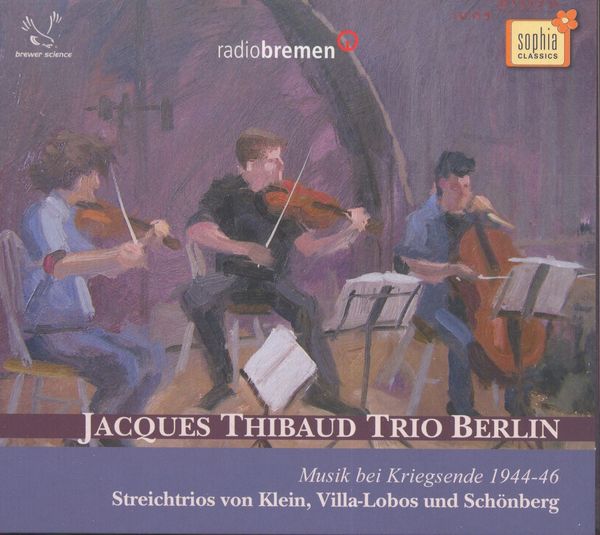
I've been waiting for this disc for a while. The Jacques Thibaud Trio Berlin has been performing the great String Trio recently. It's one of my favourite chamber works of Villa-Lobos, and it's nice to have another recording. I'm a big fan of this kind of programming on CD: the JTTB has chosen three string trios written in 1944 (Gideon Klein, who died soon after at Auschwitz), 1945 (Villa-Lobos) and 1946 (Arnold Schoenberg).

This blog seems to be stuck in 1945 (which was a busy year for Villa-Lobos). Read the last few posts for more.

Wednesday, December 24, 2008

1945 again!


Meanwhile, back in New York in 1945, here's a picture of Villa-Lobos between Aaron Copland and Brazilian Consul-General Oscar Correia, at a reception at the Waldorf Astoria. This is one of the many great photos on the website of the Museu Villa-Lobos.

Tuesday, December 23, 2008

New Piano CD


The stream of strong new recordings of Villa-Lobos's piano music continues. Fabiane de Castro's new disc A Prole do Bebê on the Oïda label looks like a winner, to judge by the streaming audio of three Villa-Lobos pieces - Branquinha, A Baratinha de Papel, and the 5th Choros - on her excellent website.

Monday, December 8, 2008

Talk of the Town 1945

"...we rolled over to the Waldorf last week to have a talk with Heitor Villa-Lobos, the Brazilian composer..."
So begins a typically breezy "Talk of the Town" story, from the February 10, 1945 issue of The New Yorker.

"When we encountered him he was perched on the edge of a chair, like a small, plump, excited sparrow, wearing a sleeveless sweater, gray slacks, blue shoes, and a look of vast amiability."
Here's the amiable composer from the same year, in this LIFE photograph by W. Eugene Smith - © Time Inc.:


"A few years ago he composed 'New York Skyline' after studying a photograph of Manhattan. We asked him how the city compared with his preconception of it and whether he thought his 'Skyline' needed any remodelling. His musical interpretation, he said proudly, was right on the nose."
Here's a 1945 photograph of the New York Skyline by Andreas Feininger, also from Google's LIFE archive:


I came across the "Talk of the Town" thanks to Alex Ross's mention of the New Yorker Digital Reader, which is indeed an amazing resource. What riches here! All of Pauline Kael's reviews, complete with period ads + cartoons! Oliver Sacks's long articles! And plenty of Alex Ross as well! Oh, and the amazing Hockey columns from the 1930's. Go Maroons!


This column is one of a regular series the New Yorker ran, in this case from March 31, 1934. The Maroons went on to beat the Rangers, but lost to the Black Hawks in the finals.

Tuesday, November 25, 2008

Villa-Lobos on Cultura FM: December 2008

Here are Villa-Lobos performances upcoming on Cultura FM from Sao Paulo. Listen here on the Internet. Times are local Sao Paulo times, one hour ahead of EST.

December 6:
10:00 CIRANDA - Academia Brasileira de Música:
Heitor VILLA-LOBOS - Doze Estudos. Timo Korhonen (violão)./ Gilberto MENDES - Três Contos de Cortázar. Henrique Morozowicz, Variações Frère Jacques. Mireille Gleizes (piano).

December 10:
13:00 DELICATESSEN com Kika Leoi:
Edmundo VILLANI CÔRTES - "Luz" e "Águas Claras". Cristiano Alves (clarineta). Tamara Ujakova (piano). / César GUERRA-PEIXE - Sonatina No.2. Midori Maeshiro (piano). / Amaral VIEIRA - Sonata fantasia para oboé e piano. Christian Schneider (oboé). Sorina Aust-Ioan (piano). / Heitor VILLA-LOBOS - Concerto para violão e orquestra. Turíbio Santos (violão). Orquestra Sinfônica Rio. Reg.: Sílvio Barbato.

23:00 NOTURNO - Clássicos Românticos na Cultura FM:
Andre JOLIVET - Chant de Linos. Philippe Racine (flauta). Robert Zimansky (violino). Monika Clemann (viola). Curdin Copray (cello). Xênia Schindler (harpa)./ Heitor VILLA-LOBOS - Quatuor. Lontano. Dir. Odaline de La Martinez.

December 20:
10:00 CIRANDA - Academia Brasileira de Música:
Leopoldo MIGUEZ - Sylvia - Elegia para cordas op. 22. Orquestra Sinfônica da Escola de Música da UFRJ. Dir.: André Cardoso. / Henrique OSWALD - Sonata. Claudio Cruz (violino). Nahim Marun (piano)/ Heitor VILLA-LOBOS - Ciranda das sete notas. Frank Morelli (fagote). Orquestra de Câmara Orpheus. / Francisco MIGNONE - Aquela modinha que o Villa não escreveu. Sexta Valsa Brasileira. Frank Morelli (fagote)./ Heitor VILLA-LOBOS - Ária de Bachianas Brasileiras n° 5. Frank Morelli (fagote). Benjamin Verdery (violão).

December 27:
20:00 O MUNDO DA ÓPERA com o Maestro Walter Lourenção:
A voz do meio-soprano Elína Garan?a. No programa obras de Heitor
VILLA-LOBOS, Ruperto CHAPÍ. Jacques OFFENBACH. Richard STRAUSS. Staatskapelle de Dresden. Reg. Fabio Luisi.

Monday, November 24, 2008

Thursday, November 20, 2008

LIFE photos

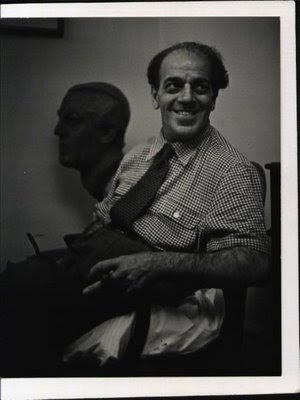
Tuesday's launch of the LIFE photo archives on Google Images has created quite a stir. Most exciting for me are the great photographs of Villa-Lobos by W. Eugene Smith that show the composer's geniality, intensity, and humanity.

The Smith photos are undated, but they look to me to be from the early 1950s (Smith left LIFE in 1955). Compare Villa in the Smith photos with the three 1945 pictures from the LIFE archive; he has a bit less hair, but just as much vitality. Pictures from the mid- and late-1950s often show an older man dealing with major illness.

Here's a great example of Smith's genius (© Time Inc.):

Sunday, November 16, 2008

Choros vol. 3

2008 has been a banner year for Villa-Lobos recordings; high on the list were the first two discs in the complete Choros series from BIS. In February they released the first volume, with Choros #5 (with Cristina Ortiz), Choros #7 and #11 (with John Neschling conducting the Sao Paul Symphony Orchestra). Then, in May 2008 came the second volume, with Fabio Zanon's Choros #1, and the SPSO musicians performing #4, #6, #8, and #9. (pictured below)


That leaves #2 (3 min.), #3 (4 min.), #10 (16 min.), and #12 (40 min.), and perhaps the two Choros Bis (10 min.), and the Introduction to Choros (10 min.). It adds up to a single well-filled disc.

It's good to see, then, that a new disc in the BIS series is coming soon. Amazon.com shows that Choros vol. 3 is due to be released on Dec. 9, 2008. There's no information yet on the BIS site, but I'll post information here as I receive it.

UPDATE: This didn't take long, thanks to the comment below from ничего (Thanks!). The new disc indeed contains #2, 3, 10, and 12, plus Choros (bis) and the Introduction to Choros, and it's available from eclassical.com. I'm downloading as I type!


Friday, October 31, 2008

Villa-Lobos on Cultura FM: November 2008

Here are Villa-Lobos performances upcoming on Cultura FM from Sao Paulo. Listen here on the Internet. Times are local Sao Paulo times, one hour ahead of EST.

November 1:
10:00 CIRANDA - Academia Brasileira de Música:
Heitor VILLA-LOBOS /Mario de Andrade - Suíte para voz e violino. Jill Gomez (soprano). Peter Manning (violino). / Heitor VILLA-LOBOS - Amazonas. Orquestra Sinfônica Símon Bolívar da Venezuela. Dir.: Enrique Arturo Diemecke. Suíte floral, op. 97. Anna Stella Schic (piano).

November 3:
13:00 DELICATESSEN com Kika Leoi:
James DEMARS - Concerto para piano e orquestra. Caio Pagano (piano). Orquestra Sinfônica Nacional Checa. Reg.: Paul Freeman. / Ernesto NAZARETH - Tupinambá Ameno Resendá. Pedro Amorin (bandolim). Maria Teresa Madeira (piano). / Heitor VILLA-LOBOS - Saudades da minha vida, Modinha e Na paz do outono. Cláudia Riccitelli (soprano). Nahim Marun (piano).

November 5:
13:00 DELICATESSEN com Kika Leoi:
Francesco Saverio GEMINIANI - Sonata I para violoncelo e baixo contínuo. Gaetano Nasillo e Tobias Bonz (violoncelo). Jesper Christensen (cravo). / Cristofaro CARESANA - La Vittoria dell'Infante. Roberto Invernizzi e Roberta Andalò (soprano). Daniela Del Mônaco (contralto). Giuseppe De Vittorio e Rosario Totaro (tenor). Furio Zanasi (baixo). / Heitor VILLA-LOBOS - Bachianas Brasileiras No.2. Orquestra Sinfônica do Estado de São Paulo. Reg.: Roberto Minczuk.

15:00 TARDE CULTURA - Música e Notícia com Sérgio Roberto Ribeiro:
Entre outras obras, destaque para o Quarteto de cordas em mi bemol maior de Felix MENDELSSOHN, a transcrição pra piano de Liszt para a abertura "Jubileu" de Carl Maria von WEBER, e as Bachianas Brasileiras n° 7 de Heitor VILLA-LOBOS.

November 10:
13:00 DELICATESSEN com Kika Leoi:
Heitor VILLA-LOBOS - Trio No.1 em dó menor para violino, violoncelo e piano. Yang Zhang (violino). Miriam Braga (piano). Tânia Lisboa (violoncelo). / Arturo MÁRQUEZ - Danzón No.4. Orquestra De Las Américas. Reg.:Benjamin Juárez Echenique. / Wolfgang Amadeus MOZART - Ballet No.32 K367 Chacona. Coral e Orquestra Sinfônica da Radio Bávara. Reg.: Sir Collin Davis.

November 15:
10:00 CIRANDA - Academia Brasileira de Música:
Henrique de CURITIBA - Três episódios. Norton Morozowicz (flauta). Henrique Morozowicz (piano)./ Alceo BOCCHINO - Suíte Miniatura de Ballet. Orquestra Sinfônica do Paraná. Dir.: Roberto Duarte. / Heitor VILLA-LOBOS - Introdução ao Choros para orquestra e violão. Timo Korhonen (violão). Orquestra Sinfônica da Rádio Finlandesa. Dir.: Sakari Oramo.

November 18:
07:00 DESPERTE COM OS CLÁSSICOS:
Johann Sebastin BACH/ BUSONI - Prelúdio e Fuga em ré maior, BWV 532. Emil Gilels (piano)/ Antonio VIVALDI - Concerto em lá maior, RV 552, "Per ecco lontano". Christophe Coin (violoncelo). Il Giardino Armonico. Dir.: Giovanni Antonini/ Heitor VILLA-LOBOS - Prelúdio n° 1. Yves Storms (violão).

November 19:
13:00 DELICATESSEN com Kika Leoi.
Mario CASTELNUOVO-TEDESCO - Sonata Op.77 (omaggio a Bocherini). Susanne Mebes (violão). / Balys DVARIONNAS - By the Lake. Orquestra de Câmara da Lituânia. Dir.: David Geringas. / Heitor VILLA LOBOS - Evocação. Cláudia Riccitelli (soprano). Nahim Marun (piano).

November 21:
15:00 TARDE CULTURA - Música e Notícia com Sérgio Roberto Ribeiro:
Entre outras obras, Choros n° 9 de Heitor VILLA-LOBOS, Quinteto com clarinete em si menor opus 115 de Johannes BRAHMS e Sinfonia em Sol menor de Alberto NEPOMUCENO.

November 22:
08:00 QUATRO ESTAÇÕES - A Música Ocidental em Épocas e Estilos:
O BARROCO: Johann Jakob Froberger, compositor alemão - Suíte XXX em lá menor. Pedro Persone (cravo)./ O CLASSICISMO: Franz Joseph Haydn - Quarteto de cordas em ré maior n°4, opus 20. Movimentos: Allegro di molto, Un poco adagio e affetuoso, Menuetto alla zingarese-trio, presto e scherzando. Quarteto Melos-Stuttgart. / O ROMANTISMO: Robert Schumann - Träumerei. (Devaneio). Leonard Hokanson (piano). / O SÉCULO XX: Heitor Villa-Lobos - Momoprecoce. Magda Tagliaferro (piano). Orquestra Nacional da Rádio Francesa. Reg.: Heitor Villa-Lobos. (Repeated on November 29 at 08:00)

November 27:
15:00 TARDE CULTURA - Música e Notícia com Sérgio Roberto Ribeiro:
Entre outras obras, As três Maria de Heitor VILLA-LOBOS, Sonata n° 2 para trompa e cordas de Luigi CHERUBINI e com Ballada para piano e orquestra opus 19 De Gabriel FAURE.

Aldo Parisot interview

I came across this 2001 interview with Aldo Parisot, the great Brazilian cellist, on the International Cello Society website.

Parisot, of course, commissioned the second Villa-Lobos cello concerto in 1954:

"My manager suggested that I ask Villa-Lobos to write a concerto for me, which I would play in my debut with the New York Philharmonic. I wrote a letter to Villa-Lobos and he agreed to do it. In 1954 he came to New York and requested that I spend a week with him so that he could get an idea of how I played. So I'd go to his hotel and he'd ask me to play anything -- scales, etudes, sonatas,concertos, etc. Then he'd write a phrase and ask me to play it. If he didn't like how I played it, he would take the cello and demonstrate what he wanted. He was a cellist, after all, and he earned a living playing in a trio in a restaurant in Brazil. He was also a wonderful guitarist and could improvise on it for hours. Interestingly, while we worked together, he sat on the table with two scores, one was the cello concerto and one was a symphony, which he was working on at the same time.

"Almost always sitting silently in the background each morning was guitarist André Segovia, who was a close friend of Villa-Lobos. Villa-Lobos and Segovia would tell jokes to each other in Portuguese, usually dirty. I often thought that the only reason Segovia came was for the lunches. Villa-Lobos' wife, Arminda, would make feijoada for us, a very popular Brazilian dish, which he would devour."

October 31, 2008: The original picture I posted (from a Stock Image library) is apparently not really Feijoada. See the comments below (and thanks to the commentor!)


So, here's the new picture, from Wikipedia:


Feijoada is an important Brazilian dish [pictured above]. I read once about Villa-Lobos writing a "Fugue Without End" on the theme of Feijoada, but I can't track down the reference. I can see the appeal for Villa-Lobos: he loved life, which includes good food and good wine, along with snooker, flying kites, playing with kids and listening to all kinds of popular and erudite music. People often comment on how the mix of ingredients in Feijoada is like the mix of diverse peoples making up Brazil. That's something Villa-Lobos would probably have agreed with as well.

Update: Found it! This is from John & Matt Lewis Thorne's "Serious Pig: An American Cook in Search of His Roots," p. 313

"Brasileiros traditionally eat the meal for Sunday lunch, leaving the rest of the afternoon free to sleep it off. Heitor Villa-Lobos composed a four-part fugue in honor of feijoada, each part representing one basic element of the dish. One is tempted to suspect that the piece, entitled "Fugue without End," was never finished because somnolence overcame the composer before he could gather together the completing measures."

Here's Elsie Houston's recipe for Feijoada, from Robert's Basement.

Here's another October 31, 2008 update: by an amazing coincidence, just when I was updating this post, I was listening to Sonia Rubinsky's new CD (vol. 7) from her Complete Villa-Lobos Piano Music series on Naxos, and came across the little piece entitled Feijoada sem perigo. Here is an explanation of this piece, from the liner notes by James Melo:

Finally, the extremely condensed gem Feijoada Sem Perigo seems to capture Villa-Lobos in the very moment of creation. In its brevity it manages to express the very essence of a musical thought, primeval and unaltered by further elaboration. The piece was dedicated to Dora Vasconcellos, the Brazilian consul in New York at the time, and the author of a few poems that Villa-Lobos set to music. Villa-Lobos dedicated the piece to Dora Vasconcellos to thank her for an invitation to partake of the quintessential Brazilian dish at her home in New York.
FINALLY, November 13, 2008: So, here's the proper Brazilian feijoada, with ingredients from the Wikipedia article:

Friday, October 24, 2008

Choros #10 at the Festival Villa-Lobos 2007

The 2008 Festival Villa-Lobos is just around the corner. So it's nice to see this YouTube post of an important concert from last year's festival: Choros #10 performed by the famous Sinfónica de la Juventud Venezolana Simón Bolivar under the direction of the great conductor Isaac Karabtchevsky. Here's the first part:


and the second:


Wow! These guys are good! (and great singing as well).

Top Scores

Here are the most popular Villa-Lobos scores from sheetmusicplus.com.

Thursday, October 23, 2008

Bank notes

When the Bank of England announced that 150-anniversary-guy Sir Edward Elgar was being replaced on the £20 note by Adam Smith, there was some negative reaction. When I was in London last week, I came across a few Elgar notes, but they'll be history soon.

Here's Villa on the 500 cruzados note from Brazil:

and the other side:


This note is no longer legal tender, but I'm sure there's no slight intended to Villa-Lobos in this. The cruzado was replaced by the cruzado novo in 1989, and then replaced by the cruzeiro in 1990, the cruzeiro real in 1993, and that's when I stopped reading the Wikipedia articles....

Sunday, October 5, 2008

New Villa-Lobos Book

Thanks to Borris Mayer for this tip: a new book in German on Villa-Lobos.

Heitor Villa-Lobos und der Aufbruch der brasilianischen Musik

Negwer coverManuel Negwer, Heitor Villa-Lobos und der Aufbruch der brasilianischen Musik, Mainz: Schott Music, 2008.

The book, which also includes a CD, is available from JPC online and Amazon.de

Friday, October 3, 2008

Marsalis Brasilianos Tour Begins

The first concert of the Marsalis Brasilianos tour was last night in Eugene OR. Here's a review from the Mainly Music Meanderings blog. It's interesting that Marsalis and the Brazilians (the Philarmonia Brasileira and their conductor Gil Jardim) didn't connect until the day of the concert. Looks like that only enhanced the music. Villa-Lobos's music comes from the informal, improvisational world of the choroes, and that seems to be the style aimed for in this concert tour. Thanks to Dan for this up-to-date information - great blog, by the way.

He points out that the published programme was changed - rather than the Suite for Strings (a very early work, from 1912), they've chosen one of Villa's great works: Bachianas Brasileiras #9. That will provide some gravitas for the second half of the show.

Tuesday, September 30, 2008

Instruments of Amazonas

Amazonas is one of the great orchestral works of Villa-Lobos's early period - it was written in 1917, the same year as Uirapuru and the Second Symphony. The orchestra used by Villa-Lobos (under the obvious influence of Stravinsky) was a large one; according to the publisher Max Eschig:
4(2flpic).3(1cor ang).4(1clpic, 1clB).3(1cbn) - 1 sarrusophone - 4(ou 8).4.3.1 - 3perc, 1timb, 1cel, 1pno, 2hp - 1 cythara do arco (ou 1 violinophone), 1viole d'amour - crd
Besides the orchestra taking up the full stage, there are a few interesting items here.


The Sarrusophone is a band instrument with the range similar to a saxophone.

The violinophone is also called the Stroh violin (referred to by Eschig as a cythara do arco). The Wikipedia article doesn't mention any use by classical composers, though the instrument was apparently in vogue in Buenos Aires in the 1920s. This is another example (along with the use of a prepared piano in Choros #08) of Villa-Lobos being ahead of the curve technology-wise.

Just to make it difficult for orchestras to revive this piece, Villa-Lobos added a viole d'amour to the score. It all wasn't enough to keep it off the stage in Albuquerque and Brussels, and there are two three excellent recordings, from Apex, Dorian, and Marco Polo.

Alma Brasileira

Here's a beautiful arrangement for orchestra - by Leandro Carvalho - of Choros #05 for piano (subtitled "Alma Brasileira" - the "Soul of Brazil"). This is from the Sonora Brasil 2008 tour by the Orquestra do Estado de Mato Grosso.

Friday, September 26, 2008

Villa-Lobos on Cultura FM: October 2008

Here are Villa-Lobos performances upcoming on Cultura FM from Sao Paulo. Listen here on the Internet. Times are local Sao Paulo times, one hour ahead of EST.

Oct. 1
13:00 DELICATESSEN com Kika Leoi:
Georg Phillip TELLEMANN - Sonata "Metodische" para flauta e baixo contínuo. Hans-Joachim Fuss (flauta). Siegfried Petrenz (cravo). / Giacomo PUCCINI - "Intermezzo Atto III" da ópera Manon Lescaut. Kiri te Kanawa (soprano). Orchestre de L'Opéra National de Lyon. Reg.: Kent Nagano. / Heitor VILLA-LOBOS - Choros No. 7 - Settimino. Músicos da Orquestra Sinfônica do Estado de São Paulo. / Louis SPOHR - Concerto para clarinete No.2 em mi bemol maior Op.57. Ernst Ottensamer (clarinete). Orquestra Sinfônica da Rádio Eslovaca. Reg.: Johannes Wildner.

Oct. 8
13:00 DELICATESSEN com Kika Leoi:
Heitor VILLA-LOBOS - Capriccio Op.49. Rebecca Rust (violoncelo). David Apter (piano). / George Joseph VOGLER - Variações sobre "Marlborough, s'en va-t-en guerre". Felicja Blumental (piano). Nova Orquestra de Câmara de Praga. Reg.: Alberta Zedda. / Radamés GNATALLI - Concerto para violoncelo e piano. Orquestra de Câmara Rio Strings. Reg.: Ernani Aguiar.

Oct. 15 (repeated Oct. 16)
13:00 DELICATESSEN com Kika Leoi. Karl Ditters von DITTERSDORF - Quarteto para cordas No.3 em sol maior. Quarteto Franz Schubert. / Heitor VILLA-LOBOS - Deuxième Sonate-Fantasie. Paul Klinck (violino). Claude Coppers (piano). / Enrique GRANADOS - La Maja y el Rulseñor. Roberto Bravo (piano). / Johann Sebastian BACH - "Allemande" da Suíte BWV 1012. Gustav Leonhardt (cravo).

Oct. 17
12:00 CONCERTOS DO MEIO-DIA com o Maestro Walter Lourenção:
Terceira Suíte de "Descobrimento do Brasil" de Heitor VILLA-LOBOS pelo maestro Roberto Duarte.

Oct. 20
22:00 SALA DE CONCERTO:
Heitor VILLA-LOBOS - Bachianas Brasileiras n° 3. Cristina Ortiz (piano). New Philharmonia Orchestra. Reg.: Vladimir Ashkenazy. / Heitor VILLA-LOBOS - Sinfonia n° 1, Op. 112 - O Inesperado. Orquestra Sinfônica da Rádio de Stuttgart. Reg.: Carl St. Clair. / Heitor VILLA-LOBOS - Sinfonia n° 2 - Ascenção. Orquestra Sinfônica da Rádio de Stuttgart. Reg.: Carl St. Clair.

Oct. 21
15:00 TARDE CULTURA - Música e Notícia:
Entre outras obras, Concerto de Brandemburgo n°5 de Johann Sebastian BACH, "A Floresta do Amazonas" de Heitor VILLA-LOBOS e de Johann STRAUSS II, Valsa "Vida de Artista", op. 316.

Oct. 26
22:00 KALEIDOSCÓPIO com Almeida Prado:
Karlheinz STOCKHAUSEN - Gruppen para três orquestras. Orquestra Filarmônica de Berlim. Reg.: Cláudio Abbado. Friedrich Goldman. Marcus Creed./ György KURTÁG - Grabstein para Stephan. Stele. Jürgen Ruck (violão). Orquestra Filarmônica de Berlim. Reg.: Cláudio Abbado./ Heitor VILLA-LOBOS - Pensées d'Enfant. Claudia Riccitelli (soprano). Toninho Carrasqueira (fluta). Diogo Maia (clarinete). Watson Cliss (cello). Reg.: Gil jardim.

Oct. 27
07:00 DESPERTE COM OS CLÁSSICOS:
WAGNER - Abertura da ópera "O Holandês Voador". Orquestra Filarmônica de Munique. Reg.: Hans Knappertsbuch. VILLA-LOBOS - Bachianas Brasileiras n° 5. Barbara Hendricks (soprano). Eldon Fox (violoncelo). Oito Violoncelistas da Filarmônica Real Britânica. / CHOPIN - Polonaise n° 6, op. 53, "Heróica". Elisabeth Leonskaja (piano).

Oct. 28
13:00 DELICATESSEN com Kika Leoi:
Heitor VILLA-LOBOS - Première Sonate-Fantasie (Desesperança). Paul Klinck (violino). Claude Coppers (piano). / Ernesto NAZARETH - Odeon e Duvidoso. Ida Maltese e Sylvia Maltese (piano). / Alexander BORODIN - Quarteto para cordas em ré maior No.2. Quarteto Brodsky.

Oct. 31
15:00 TARDE CULTURA - Música e Notícia:
Entre outras obras, Fantasia-Polonaise, opus 61 de Frederic CHOPIN, Trechos de "Romeu e Julieta" de Sergei PROKOFIEV e "Uirapurú", balé para orquestra de VILLA-LOBOS.