Friday, February 11, 2011

New CD reviews


I've been busy lately writing notices for the Naxos Customer Review Team, all of which you can read here.  They include Andres Villamil's Chicaquicha, guitar music from Colombia which includes some pieces which sound to my ear to be influenced in a major way by Villa's Preludes and Etudes.  Also Manuael Blancafort's Piano Music, volume 5 - the end of a great series from Naxos and a great achievement for the pianist Miquel Villalba.  Blancafort and his Catalan compatriots Albéniz, Montsalvatge, and Mompou have the same mix of local folklore and Debussy/Ravel influences in their piano music as Villa-Lobos.  I was really impressed with these CDs, along with new recordings from Anna Vinnitskaya, and Edward Gardner & the BBC SO.  As usual, Naxos continues to produce and distribute some amazing CDs.

Wednesday, February 9, 2011

Villa-Lobos at the 2011 Carnaval


A Bloco de carnaval is a street Carnival group. A brand-new group is Bloco Feitiço do Villa, which will be parading on the morning of March 5, 2011 (Villa's 124th Birthday), in front of the UFRJ Music School.

"Feitiço do Villa" means, I believe, "The Charm of Villa", though Google Translate for some reason gives "Groundhog Villa", which is charming in its own way.  The focus of the group is a common theme here at The Villa-Lobos Magazine: the importance of Villa-Lobos and classical music to popular music and the Samba.  Here are the words of the block's Samba:

Eu vou juntar
Chopinho com Chopin
Não importa o amanhã
Hoje eu só quero Bach

Vou misturar
Cartola com Ravel
Villa-Lobos com Noel
Pra ver que bicho dá

Eu vou provar
Que batuta batuca
Que fagote no pagode
Pode dar um bafafá

Se Noel Rosa
É um clássico nato
Villa-Lobos é de fato
Um artista popular

Hoje tudo é fantasia
Hoje tudo é ilusão
E na folia
Clara Nunes, quem diria,
Canta em duo com Bidu Sayão

Nosso bloco desfila
Com magia quase sobrenatural
Que legal
É o Feitiço do Villa
Encantando de alegria o carnaval

Which comes out thusly in Goonglish:
 
I'll join
Chopinho with Chopin
No matter what tomorrow
Today I just want to Bach

I will mix
Cartola with Ravel
Villa-Lobos with Noel
To see what kind of animal gives

I'll prove
That baton Batuca
What bassoon at the pagoda
Can you give a brouhaha

If Noel Rosa
It's a classic native
Villa-Lobos is in fact
A popular artist

Today everything is fantasy
Today everything is illusion
And in the revelry
Clara Nunes, who would say,
Sing a duet with Bidu Sayao

Our block parade
With almost supernatural magic
That's cool
It's Groundhog Villa [sic]
Enchanting joy of the carnival
The words and music are by the great Brazilian classical composer Edino Krieger, and his son Edu, an accomplished popular composer and performer.  I'm looking forward to following the adventures of this group as they venture forth onto one of the world's most dazzling stages: the Rio Carnaval.

Tuesday, February 8, 2011

48th Festival Villa-Lobos

The Museu Villa-Lobos has been presenting annual Festivals featuring the music of the Maestro for nearly half a century. This video shows how relevant Villa's music remains today, and it also highlights the vitality of the classical music scene in Brazil. Kudos to the Museu for this awesome Festival.

Sunday, February 6, 2011

Mandu Çarará in New York


From the New York Philharmonic Archives, the program of an important concert conducted by Villa-Lobos.  This was the first (and the last?) North American performance of the secular cantata Mandu Çarará that included a full orchestra.  Also included was an important work by Villa's close friend Florent Schmitt.

Thursday, February 3, 2011

Blue Rose Duo Villa-Lobos CD


Blue Rose Duo is cellist Lars Hoefs and pianist Rose Chen.  Their new Villa-Lobos CD from Wanderlust Music contains all of Villa's music for cello and piano except for the 2nd Sonata (the score for the 1st Cello Sonata is lost).  The disc was recorded in California a year ago, and it's available from various web sources, including Amazon.com (Mp3 download) and CDBaby.

Villa-Lobos was a professional cellist before he became known as a composer, and many of his earlier works were written or arranged by him for cello and piano.  The most substantial pieces on the disc are the 1913 Pequena Suite, and the three movements that Villa originally wrote for cello and piano that were incorporated into his orchestral suite Bachianas Brasileiras #2.  But the emotional centre of the disc is the Song of the Black Swan (O Canto do Cisne Negro).  This beautiful piece was originally a portion of the symphonic poem Naufragio de Kleonicos, written in 1916.  The following year Villa-Lobos arranged the song for cello and piano, and it's taken off in the cello repertoire in recent years.  I count 16 performances in the Villa-Lobos Website Concerts Database, and 20 recordings!  The present recording of this piece is very good indeed, right up there with the recording by Antonio Meneses and Celina Szrvinsky on Avie.

The other smaller pieces on the disc certainly show Villa's gift for melody, though none is as striking as the Black Swan.  You'll often see these pieces arranged for other combinations; Robert Bonfiglio arranged a number of them for harmonica and orchestra for his RCA CD of the Harmonica Concerto, for instance.  There's a premiere recording of "Improviso #7", written for violin and piano from 1915, played here in a version for cello and piano that's very effective.  There are no Improvisos #1-6, by the way; no wonder Villa's catalogue was in such a messed-up state until David Appleby and the Museu Villa-Lobos began organizing things.

Lars Hoefs adds so much value to this disc with his excellent liner notes. This is a first-class production all around, and one of the standout Villa-Lobos discs of the past few years.

Wednesday, February 2, 2011

Mandú Çárárá in Caracas


I normally don't post shaky web-cam YouTube videos here at The Villa-Lobos Magazine, but this is really exceptional.

Mandú Çárárá is probably the greatest Villa-Lobos work that nobody knows. It's a Secular Cantata from 1939 which is unavailable on CD. This exciting performance is from last weekend's final performance of the 4th annual Festival Villa-Lobos in Caracas. Roberto Tibiriça conducts the amazing Sinfónica de la Juventud Venezolana Simón Bolívar & Coro Sinfónico Juvenil de Venezuela.  I'm hoping that the other major work from that concert (Symphony #04) shows up on YouTube soon.

Outstanding!

Magdalena video


This is my favourite piece from Magdalena, Villa-Lobos's 1948 Broadway show.  This video is from the June 2009 production in Campinas, featuring soprano Graziela Sanches.  There's more from this production at YouTube.

This show had an influence on musicals in the late 40s and into the 50s; I suspect that Leonard Bernstein knew the work well.

Saturday, January 29, 2011

New Choral CD from Hänssler Classic


I'm looking forward to this disc, due next month from Hänssler Classic.  Marcus Creed conducts the SWR Vokalensemble in an exciting programme of choral works, including some World Premiere recordings.  Here are the works included:
  • Cor dulce, cor amabile
  • Jose
  • As Costureiras
  • Bachianas brasileiras No. 9 (version for chorus)
  • Choros No. 3, "Picapau" (version for a capella)
  • Preces sem palavras
  • Duas lendas amerindias em nheengatu
  • Ave Maria (version for 4 part choir)
  • Bazzum
  • The Well-Tempered Clavier, Book 1: Prelude and Fugue No. 8 in E flat minor / D sharp minor, BWV 853 (arr. H. Villa-Lobos for choir)
  • Na Bahia tem (version for male chorus)
  • Bendita sabedoria
You can pre-order the CD from Amazon.com.

Cia. Bachiana Brasileira Plays BB#3

Pianast Flávio Augusto and the Orquestra Bachiana Brasileira, under the direction of Ricardo Rocha, play the least often performed work in the Bachianas Brasileiras series. It's one of the two great piano concertos of Villa-Lobos, along with Choros #11. None of the five works Villa titled Piano Concertos is at this level.

Wednesday, January 26, 2011

Mandu Çarárá in Caracas


The 4th Annual Festival Villa-Lobos in Caracas continues with an important concert conducted by Roberto Tibiriça.  The Sinfónica de la Juventud Venezolana Simón Bolívar and the Coro Sinfónico Juvenil de Venezuela will perform two rarely played works: the 4th Symphony and the 1939 Cantata Mandu Çarará.

The latter work is especially in need of more performances and a good new recording.  In the words of Fabio Zanon, "It's a mystery why a work so spectacular is practically unknown."

Thanks to Eugenia Meijer Werner for the heads-up on this.

Thursday, January 20, 2011

The Brazilian Guitar Quartet Plays Villa-Lobos

The music of Villa-Lobos has always attracted arrangers, including the composer himself.  Villa adapted his own works in a multitude of formats; his first thoughts about musical ideas were rarely his last.  There is so much interesting music to adapt beyond the usual Aria from Bachianas Brasileiras #5 (which is out there in so many versions, including harmonica, saxophone, and percussion) and the Little Train movement from BB #2 (a favourite of marching bands and even reggae groups). 


The Brazilian Guitar Quartet included an arrangement of the entire Bachianas Brasileiras #1 in a previous CD "Essencia do Brasil" which I thought worked out very well.  The new BGQ Plays Villa-Lobos CD, which will be released later this month, includes a wide selection of music originally written for piano and chamber ensemble, arranged by Tadeu do Amaral for four guitars.  The music is selected and presented to show off Villa's music and the group's musicianship to best advantage.  There are a variety of infectious rhythms, some sweet and sad melodies, moments of modernist angularity, and transcendent beauty from one of Villa's greatest chamber works.

While Villa-Lobos often composed at the piano, and he wrote a host of amazing, idiomatic pieces for the instrument, his native instrument was the guitar.  His nickname as a member of a choroes group as a young man was "classical guitar".  His few pieces for guitar loom so large in the music for guitar, and he often imitates the guitar in his piano works and even his orchestral music.  When he wrote music for harp (besides his 1953 Harp Concerto, he wrote some very important chamber works with harp, especially in the 1920s) he was often thinking of the guitar: "I played the harp from my experience with the guitar", he once said.  I mention the harp because the four guitars of the BGQ often evoke this instrument in Amaral's Villa-Lobos arrangements.

It's interesting, then, to listen to the BCG version of the early modernist piano work Suite Floral, written under the influence of Debussy, Faure, and Ravel.  The sound of the guitars evokes the sound-world of Parisian chamber music with harp as much as it does the piano music of the impressionist masters.  This is definitely transatlantic music, though, since Brazilian rhythms are an important part of the work.  Another piece on this disc which stands out is Amaral's adaptation of the Twelfth String Quartet, one of Villa's greatest chamber works, a piece of great subtlety and power.  This disc is very highly recommended!

Friday, January 7, 2011

Villa with a Reggae Beat


The "Trenzinho caipira" movement of Bachianas Brasileiras #2 is one of the most commonly arranged pieces by Villa-Lobos, especially in Brazil. I think this reggae version, by the Orquestra Brasileira de Música Jamaicana, is very successful.

Tuesday, January 4, 2011

Soni Ventorum plays Villa-Lobos


 Bill McColl sent me this email before Christmas:
Nine woodwind pieces are now available for free download in mp3 format. The material consists of live location recordings and out-of-print commercial recordings by the Soni Ventorum Quintet. (The Trio performance has been running for a long time in ogg format on the Wikipedia site.)

Visitors to this site scroll down to find Villa Lobos:


http://soniventorum.com/soniventorum_archives.html

The group had a long connection with the works of Villa Lobos and a great devotion to them. A high point was meeting Mindinha in Rio.
Thanks so much for this, Bill!  These performances include all of Villa's chamber music for winds:
  • Choros #02 for flute and clarinet
  • Trio for clarinet, oboe, and bassoon
  • Choros #07 for flute, oboe, clarinet, alto saxophone, bassoon, violin, and cello
  • Quinteto em forma de choros
  • Quartet for flute, oboe, clarinet, and bassoon
  • Duo for oboe and bassoon
  • Bachianas Brasileiras #6 for flute and bassoon
  • Fantaisie Concertante for clarinet, bassoon, and piano
Many of these performances appeared on Pandora LPs in the 1970s and 80s (such as the LP pictured above, MHS 3187).  Others are from later recordings of live concerts.   Thanks so much to Soni Ventorum for making this important archive available to music lovers around the world!

    Thursday, December 30, 2010

    Through the Night

    One of my favourite radio programmes is BBC Radio3's Through the Night, presented by John Shea.  It's six hours of interesting music, often including recent concert recordings from around the world.  The show begins at 1:00 a.m. London time, a convenient 6:00 p.m. here in Red Deer.


    For the next seven days you can listen to a March 2010 concert of Brazilian music by the Orchestra della Svizzera Italia [pictured above], conducted by Emmanuel Siffert.  Alvaro Pierri is the soloist in the Villa-Lobos Guitar Concerto, and the concert also includes the amazing Saudades do Brasil by Darius Milhaud.  Listen until January 6, 2011.

    Sunday, December 26, 2010

    Harp Concerto from RAI

    Villa-Lobos's Harp Concerto, written in 1953 for Nicanor Zabaleta, should be much better known than it is.  Letizia Belmondo is the harpist in this May 2010 RAI concert from Torino. The first movement begins in the 2nd minute of this clip, and the other movements are also available: 2, 3, 4.

    Friday, December 17, 2010

    Thursday, December 16, 2010

    Música Erudita Brasileira

    The journal Textos do Brasil recently published an issue featuring classical music: #12 is entitled "Música Erudita Brasileira," which is available in PDF format.   There are more than a few articles of interest to the Villa-Lobos fan who can make out at least some Portuguese.   The article "Villa-Lobos Moderno e Nacional" by Jorge Coli discusses the transition in Villa's music from the modernism of the 1920s to the nationalism of the 30s.

    Thanks to the Brazilian Concert Music blog for the link to this journal.  The site is currently featuring the CD that came with this issue, which contains music by a wide variety of Brazilian composers.

    Tuesday, December 14, 2010

    The end of an era in the Villa-verse

    The December 2010 issue of Revista da União Brasileira de Compositores brings the news that Turíbio dos Santos, Director of the Museu Villa-Lobos, has stepped down from his post after 24 years.


    The "keeper of the scores" at the Museu since 1986, Turibio will continue in his important role as President of the Academia Brasileira de Música (founded by Villa in 1945), and will remain active with the Friends of the Museum.  Ending his term at 24 years was, according to the great guitarist and scholar, a gesture of respect to Villa-Lobos's widow Arminda, who was Director of the Museum for 25 years, until her death in 1985.

    We owe a huge debt of gratitude to Turíbio dos Santos for his amazing efforts on behalf of the great Brazilian composer.  It's no coincidence that there's been a huge increase in Villa's reputation in the past 24 years.

    There are lots of other interesting things included in this interview, which I found at the website of the Escola de Música UFRJ.  The quite readable English translation from Google is here.

    Villa: Fantaisie onirique


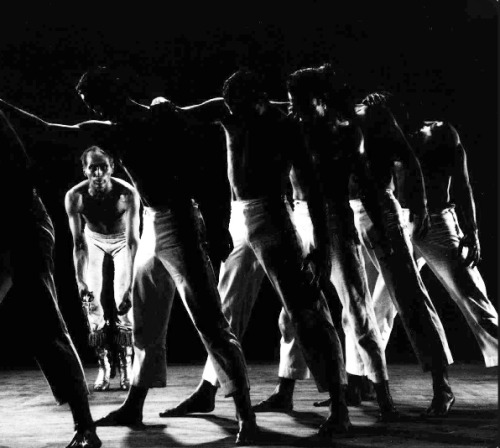
    Villa: Fantaisie onirique is a theatre/dance project of Théâtre du Lierre, based on the music of Villa-Lobos.  The show runs from December 15-19.  You can watch a video of the production here.

    Wednesday, December 8, 2010

    Sergio and Odair Assad Concert from NPR


    Sergio and Odair Assad play Albeniz, Piazzolla, and Villa-Lobos's A Lenda do Caboclo. This NPR concert is from August 2010; you can hear the second half (Gnattali, Jobim, Gismonti, and Sergio Assad) at NPR.org.

    Monday, December 6, 2010

    Fernando Salis Projection on Christ the Redeemer


    Film-maker and communications professor Fernando Salis created this amazing projection onto the famous statue of Christ the Redeemer high above the city of Rio de Janeiro, all to the music of Villa-Lobos (the fourth movement of Bachianas Brasileiras #7 "Fuga: Conversa"). This October 2010 project, part of a campaign against child abuse, shows the power of Villa-Lobos to move and to represent the Brazilian people.

    Thursday, December 2, 2010

    A New Villa-Lobos Score


    Big news from Rio de Janeiro: a new Villa-Lobos score which was considered lost has been performed as part of the 48th Annual Festival Villa-Lobos, organized by the Museu Villa-Lobos.

    Cânticos Sertanejos, a work from 1907, is for flute, clarinet, and strings.  The score is held by the Museu, and is © 2010 by the Academia Brasileira de Musica. The resurrection of this work is due largely to the efforts of Maestro Roberto Duarte, who edited and revised the work and conducted its first performance at the Festival last month.  The musicians at that performance were: Marcelo Bomfim (flute), Cristiano Alves (clarinet), Quarteto Rio de Janeiro (Felipe Prazeres, violin I; Gustavo Meneses, violin II; Ivan Zandonaide, viola; Marcus Ribeiro, cello), Adonhiran Reis, Flávio Santos, Thiago Lopes, Carlos Mendes and Flávia de Castro (violins), Ana Luiza Lopes (viola), Fabio Coelho (cello) and Ricardo Cândido (bass).  What a thrill it must have been to be involved in this historic event!

    Thanks to the Museu's Marcelo Rodolfo for sending me this information so promptly.  I feel privileged to present this exciting news to so many Villa-Lobos fans around the world.

    Wednesday, December 1, 2010

    Choros #09 in Caracas

    Choros #09 is one of Villa's great orchestral works, and one of the most obscure. This performance is from the 4th Annual Festival Villa-Lobos in Caracas, Venezuela. The Sinfónica de la Juventud Venezolana "Simon Bolívar" is conducted by Roberto Tibiriça.

    Saturday, November 27, 2010

    IV Festival Villa-Lobos in Caracas

    The Fourth Annual Festival Villa-Lobos in Caracas began last week, and continues with a concert on December 2nd, featuring two rarely-performed works: the Fourth Symphony, and the Secular Cantata Mandu Çarará.  In the first concert of the Festival, on November 21, the equally rare Choros #09 and Momoprecoce were programmed.  Isaac Karabtchevsky conducts the highly-regarded Sinfonica de la Juventud Venezolana "Simon Bolivar."

    Wednesday, November 24, 2010

    Feldkirch Festival 2011


    The theme of the 2011 Feldkirch Festival, to be held in the Austrian town from May 25 to June 5, is the music of Brazil and Cuba, and a number of important Villa-Lobos pieces will be featured.  Two great Brazilian instrumentalists headline the show: pianist Cristina Ortiz and cellist Antonio Meneses.  It's especially nice to see the 4th Piano Concerto, which is rarely on concert programs, and also the cello & piano version of Bachianas Brasileiras #2.

    Thanks to a tweet from MOMOtheShiba for the news on this.

    Tuesday, November 23, 2010

    Almeida Prado, 1943-2010

    November 21st was a sad day for Brazilian music; Almeida Prado died in Sao Paulo, at the age of 67.   A student of Messiaen, Boulanger, Foss, and Ligeti, Almeida Prado loomed large in the vibrant classical music scene of 21st century Brazil.

    Here is a fitting tribute: cellist Antonio Meneses plays Preambulum.

    Concerto Grosso in Newton Center MA


    On December 5th, the Charles River Wind Ensemble will be playing the amazing but rarely performed Concerto Grosso for Woodwind Quartet and Wind Orchestra.  Actually, this is the first time I've come across a performance in more than 15 years of maintaining the Villa-Lobos Concerts database.

    Bruce Gelin from the Ensemble writes about this piece:
    This work is a wonderful example of his mature style, and though it has no specific "nationalistic" or Brazilian references, it's immediately recognizable as pure Villa-Lobos. The virtuoso solo parts for clarinet, oboe, flute, and bassoon are complemented by a large wind organization, deployed with restraint and selectivity to produce subtle tone colors. Our rehearsals of this piece have had to deal with the typically poorly edited score, requiring a lot of back-and-forth to try to get a fully coherent rendition. But it's going to be a real treat, and a good playing of a rarely heard composition.
    Good luck with this, Bruce, and with the rest of your programme, which includes so many interesting works!

    By the way, there are two very good performances of the Concerto Grosso available on CD, from Naxos and Albany, and both are available at the Naxos Music Library.

    Wednesday, November 17, 2010

    Villa-Lobos's Funeral

    Today is the 51st anniversary of the death of Villa-Lobos. Here is a fascinating video (without sound) of his funeral:

    This is from "Velório do Maestro Villa-Lobos" on the UOL Website.

    Monday, November 15, 2010

    The Emperor Jones


    Villa-Lobos wrote his ballet score based on Eugene O'Neill's play The Emperor Jones for José Limón’s dance company in 1956.  The Fundación de Danza José Limón is in the process of evaluating entrants to a design competition for a new production to be directed by Clay Taliaferro.  The new version of The Emperor Jones will be presented in Culiacán, México in April/May 2011, and in New York in June.  This looks like it will be one of the major Villa-Lobos events of 2011.

    Monday, November 8, 2010

    OSESP European Tour 2010

    The Orquestra Sinfônica do Estado de São Paulo (OSESP) is currently on tour in Europe, and are featuring Choros #06 in most of their concerts.  This is great exposure for one of Villa-Lobos's least known great orchestral works; here is a complete list of concerts with Choros #06.

    You can follow the tour on Tumblr, and via Twitter.  Here's a snippet of Choros #06 from the Innsbruck concert that took place earlier today:

    Wednesday, October 27, 2010

    48º Festival Villa-Lobos


    The 48th annual Festival Villa-Lobos, organized by the Museu Villa-Lobos in Rio de Janeiro, takes places next month, from the 12th to the 28th of November.  The Festival's new website includes programming information.  It's an impressive line-up; highlights include:
    • the jazz group Rabo de Lagartixa
    • Quarteto Radamés Gnattali
    • the choros group Os Matutos
    • the great Quinteto Villa-Lobos
    • a showing of Zelito Viana's film Villa-Lobos, uma vida de Paixão
    • Joel Nascimento
    • Wagner Tiso and the group Uakti
    • and many, many others
    Follow the Festival's Twitter feed, @fvlobos

      Monday, October 25, 2010

      A new resource for Classical Music from Latin America

      I was pleased to come across the Concierto.org website from the NPR station WDAV.  Read this inaugural post from Ken Keuffel on the Concierto blog - it lays out the rationale for the site, which is in its pilot phase.  I look forward to the development of what looks like a valuable new web resource.

      By the way, I'm a big fan of Alondra de la Parra and her recent Sony CD Mi Alma Mexicana/My Mexican Soul - I strongly recommend it!

      Sunday, October 17, 2010

      Trio for Oboe, Clarinet and Bassoon on the Road

      An interesting programme of music for Oboe, Clarinet, & Bassoon, including Villa-Lobos's excellent work from 1921, on the road in Brazil during the last week in October.  Thanks, once more, to Carlos Eduardo Amaral for this information.

      Wednesday, September 29, 2010

      New Reviews

      Here are a few of my reviews of CDs distributed by Naxos Records.  Adding more, but I'm still behind!

      Alicia de Larrocha playing Manuel de Falla, on a new disc from Newton:


      A new Naxos compilation of Ginastera ballets, conducted by Gisele Ben-Dor:


      The latest Granados piano disc in Douglas Riva's series on Naxos:


      Ignacio Cervantes' Danzas Cubanas played by Davide Cabassi:


      Friday, September 24, 2010

      Marcelo Bratke at the Penitenciária Feminina do Butantã

      I came across another interesting project by the amazing pianist Marcelo Bratke. He recently performed a concert (in his Cinemusica Villa-Lobos and Brazil series) before an audience of 270 at a women's prison in Sao Paulo. This story at Estadao.com.br is full of moving bits.  Raquel, serving 4-1/2 years for armed robbery says "É uma música diferente, faz bem para a alma." (It's a different song, it's good for the soul).  Bratke was a bit surprised by such a positive response:

      "Elas chegaram a cantarolar quando toquei as Cirandinhas do Villa-Lobos, não esperava que isso pudesse acontecer....Senti aqui uma energia diferente. Elas me ajudaram a tocar." (They began to sing when I played the Cirandinha of Villa-Lobos; I did'nt expect this to happen.... I felt a different energy here. They helped me play.)

      Here is a video with some highlights from that concert.  The piece being played is Caixinha de Musica Quebrada, from Bratke's latest Villa-Lobos CD.


      Bratke will bring his Cinemusica Villa-Lobos and Brazil project to London, when he performs Brazilian music in front of a film by Mariannita Luzzati, at Southbank Centre on December 2nd.

      Friday, September 17, 2010

      Guitar Concerto video with Turibio Santos

      Recently posted on YouTube, an impressive performance of the Guitar Concerto with Turibio Santos.

      Wednesday, September 15, 2010

      Tuesday, August 17, 2010

      Sonia Rubinsky Contest Ends

      Congratulations to Carl Woideck of Eugene OR, the final winner of a CD from Sonia Rubinsky's complete set of Villa-Lobos's Piano Music on Naxos.  Thanks, everyone, for participating!


      This 8-CD set is available at a bargain price [Amazon.com - HBDirect]; it's an indispensable part of any good Villa-Lobos collection.

      Thursday, August 5, 2010

      Sonia Rubinsky Contest, v.7 winner & v.8 review

      The contest is now over; thanks, everyone, for participating!

      Congratulations to Joe Michels of Troy NY, the penultimate winner of a CD from Sonia Rubinsky's complete set of Villa-Lobos's Piano Music on Naxos. We're now down to the last disc in this set; your last chance to win! It's easy to enter: send an email to villa-lobos@rdpl.org and tell me your favourite piano piece by Villa-Lobos. If you've already entered, your name stays in the pool.

      The winner of Volume 8 will be drawn on Friday, August 6. 

      The final disc in the series was recorded, once again, in L'Eglise Saint-Michel in Paris, this time in April 2007.  The focus of this disc is the world of children and Brazilian folklore.  The final two volumes (#10 and 11) of the piano albums of the Guia Pratico require a high level of virtuosity from the pianist.  As James Melo points out in his liner notes, the last album is dedicated to the great Polish pianist Mieczyslaw Horzowski.  It's too bad, by the way, that Hozowski hasn't left any significant Villa-Lobos recordings behind; the only one I know of is on a BBC Classics CD with 2 short pieces.

      The 11th Album of Guia Pratico, by the way, is much later than the first ten.  It was published in 1949, nearly 20 years after the bulk of the collection came out, during Villa's musical education phase.  Rubinsky handles everything Villa-Lobos throws her way, and that's not inconsiderable.  Rubinsky also handles the simpler, more delicate early Suites Infantils very well.  I find some of these early pieces quite impressive; they speak to the innocence and purity of childhood.

      Tuesday, August 3, 2010

      A New Complete Villa-Lobos Piano Series


      It's great to finally hear the first disc in Marcelo Bratke's Complete Solo Piano Works of Villa-Lobos series on Quartz.  It includes the Cirandas, Cirandinhas, and Caixinha de Musica Quebrada.  You can order the CD or download the disc on the Quartz site (the Download is only £5.99), and read the excellent liner notes by Bratke and journalist Celso Masson. 

      Monday, August 2, 2010

      Brasil: Folclore de Norte a Sul


      An interesting concert by the Camerata Heitor Villa-Lobos de Batatais, on Aug. 29 in Batatais, from their blog.  That looks like a Saci in the lower-left corner.  This prankster character from Brazilian folklore shows up in Villa's String Quartet #01.

      Brazilian Classics at Carnegie Hall


      Brazilian Classics: from Villa-Lobos to Tom Jobim.  A great lineup for this November 24, 2010 concert at Carnegie Hall.

      Sunday, August 1, 2010

      Villa-Lobos by Fraga

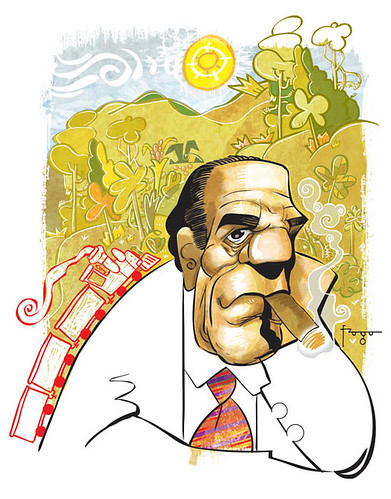
      Caricaturists love Villa-Lobos; here's a great one by the Brazilian artist Fraga, from his excellent blog, Fraga Caricaturas.

      Friday, July 23, 2010

      More home movies

      It's nice to see these pictures of domestic life. One of the great love matches in classical music: Villa and Mindinha.

      And I always love seeing Tom Jobim talk about his idol. I wish I knew what he was saying, but maybe the Villa-Lobos-inspired cigar says it all!

      Tuesday, July 20, 2010

      Sonia Rubinsky Contest, v.6 winner & v.7 review

      The contest is now over; thanks, everyone, for participating!

       Congratulations to Joana Gama of Portugal, the sixth winner of a CD from Sonia Rubinsky's complete set of Villa-Lobos's Piano Music on Naxos. Only two more discs will be awarded, and the set will be complete. It's easy to enter: send an email to villa-lobos@rdpl.org and tell me your favourite piano piece by Villa-Lobos. If you've already entered, your name stays in the pool.

      The winner of Volume 7 will be drawn on Friday, July 23rd.

      The seventh volume in the series was my favourite, since it included so many pieces I hadn't heard before.  In 1932 Villa-Lobos made a piano version of his early orchestral score Amazonas, which was first published in 1917.  Like in the great Rudepoema of the early 1920s (which Villa-Lobos orchestrated in the same year, 1932, as the Amazonas reduction), there's a lot happening for only 10 fingers and 88 keys to manage at once.  It's interesting that Prof. Tarasti should say, about the Rudepoema orchestration: "... one can only be amazed at how 'orchestral' the piano work already is."  And, though you can't always un-scramble an egg, I find the piano version of the great Stravinsky-infused orchestral version of Amazonas quite pianistic.  I wonder how it was that Villa-Lobos was reducing and orchestrating these two big scores at the same time.  Was it a case of the always practical composer coincidentally needing different versions of these scores, or did he just decide one day to set himself these interestingly symmetrical tasks?

      The transcriptions for piano of the Guitar Preludes by José Vieira Brandão provide another fascinating listening experience, and one which I found even more musically satisfying.  These five pieces are among the greatest in the guitar literature, and are the first Villa-Lobos works I heard (and, naturally, fell in love with).  They fit very well in their new piano guise, which is a tribute both to Brandão's re-thinking of the music for the piano, and Rubinsky's phrasing on the keyboard.  I thought the third Prelude, inspired by Bach, worked especially well on the piano.  James Melo, in his excellent liner notes, calls the Brandão transcriptions "true transcendental etudes for the piano."  They deserve to be taken up by more pianists, either as a group, or one at a time as a encores.  It's a good way to get this response: "I know this piece. What is it? It's by Villa-Lobos, but wait a minute! Something doesn't sound right!"

      In the 1940s Villa-Lobos transcribed the third movement of Bachianas Brasileiras #2 (not #3 - a typo in the liner notes) for piano.  Dedicated to Georgette Baptista, this version was never published (the score is in the Museu Villa-Lobos), and was first played by Cláudia Tolipan in London in 1990. It sounds a pretty slight piece on the piano.  It makes you want to hear a really good orchestra led by a really good conductor (let's say the Simón Bolívar Symphony Orchestra of Venezuela, conducted by Eduardo Mata).

      The rest of the disc is filled with really interesting little bits, including some world premiere recordings.  I play Feliz aniversario from the Canções de Cordialidade every year on Villa-Lobos's birthday (March 5th), and Feliz Natal is always in my Christmas playlist as well.

      The sound from this 2007 recording continues excellent, especially in the turbulent Amazonas.  I've read reviewers who prefer the bright sound of the later Paris recordings (6-8) to the softer sound provided by Kraft & Silver in their earlier Toronto ones (2-5).  But the whole series seems to me to place one in a realistic space, and Rubinsky does the rest!

      Monday, July 19, 2010

      Paulo Moura & Turibio Santos Play Villa-Lobos

      Here's a YouTube find: the late Paulo Moura and guitarist (and Museu Villa-Lobos Director) Turibio Santos play Claude Pascale's "Melodia Sobre o Prelúdio No. 1 de Villa Lobos".

      A new book from France

      A new book from French musicologist Rémi Jacobs has been published by Bleu Nuit, in their Horizons series.  It's a slim volume (174 pages), but according to this post at ClassiqueNews.com, it includes some interesting interviews: John Neschling discussing the Choros series; Sonia Rubinsky on Rudepoema; Christina Ortiz on the Piano Concertos; Debora Waldman on The Discovery of Brazil; and Wilhem Latchoumia on the Ciclo Brasileiro.

      The book is available from Amazon.fr.

      Rémi Jacobs: Heitor Villa-Lobos. Bleu nuit éditeur, collection Horizons. 174 pages.  ISBN: 978 2 35884 011 8

      I'll send in my order, and post a review once I've deciphered the text with the help of my two brilliant French-immersion-educated children.

      Here is some information on Rémi Jacobs from the Bleu Nuit website (thanks to Google Translate):

      A graduate of the Paris Conservatoire, Remi Jacobs studied harmony, counterpoint, music history and musicology. He has spent his entire professional career in various record companies, particularly with EMI Classics.  He has published several books on music and musicians. A trip to Brazil has fueled his passion for this great country and revived his knowledge of Villa-Lobos.

      Remembering Paulo Moura


      The sad news came last week: Brazilian musician Paulo Moura was dead at the age of 77.  Larry Rohter's fine tribute in a July 18, 2010 New York Times article shows Moura's versatility and his importance as a musician in his native land and abroad.  Moura, like many Brazilian musicians, was absolutely at home in both the classical and popular musical worlds.

      Moura has recorded a number of Villa-Lobos pieces over the years.  One of the most important of all Villa-Lobos recordings is the great CD on the Kuarup label Os choros de câmara.  Moura played the clarinet in Choros #02, and the alto saxophone in Choros #07.  It's a shame that this disc (and the rest of the Kuarup catalogue) is no longer available; if you ever see a copy on eBay or in a used record shop, buy it!

      In 1983 Moura recorded the Saxophone Fantasia in the version with piano (with the great pianist Clara Sverner), though again one would be hard-pressed to come across this Brazilian EMI LP that I don't believe has ever been re-released on CD.

      Moura also recorded the Saxophone Fantasia in its original orchestral version, in 1992 with the Orquestra de Câmara Brasileira, conducted by Bernardo Bessler.  This is at least available on CD, from Le Chant du Monde, and may be available from online vendors.

      Luckily, many of Moura's jazz and MPB recordings are easily available.  I especially recommend his Latin Grammy winning Pixinguinha, from 1998.

      Monday, July 12, 2010

      Villa-Lobos & Electronic Music

      In 1955, H. De Carsalade Du Pont published an article called "Regards sur Villa-Lobos", in the Paris periodical Études, (1955/07, pp. 94-103). I'm slowly making my way through this interesting article with my cereal-box French (helped, of course, by Google Translate). In the meantime, here are some interesting words about Villa's involvement in the early electronic music scene:

      Apres les instruments classiques, il s'interessa a ceux que l'electronique venait de faire naitre. Il connut l'Onde Martenot lors de son premier sejour a Paris en 1923, mais l'appareil etait encore si imparfait que, malgre l'insistance de M. Gaveau, Villa-Lobos refusa de composer pour un instrument sur lequel on ne pouvait pas encore placer une note avec precision. Il ne cessa pas pour autant de s'interesser aux inventions nouvelles et il fut un des premiers a ecrire pour le Novacorde, le dernier ne a ceux dont le son resulte des oscillations d'un circuit electrique.

      Villa-Lobos was always interested in new instrument technologies, and hung out with avant-garde composers in Paris in the 1920s, most notably Edgard Varèse and Olivier Messiaen. I was unaware, though, that he was exposed to the Onde Martenot as early as 1923.  Messiaen's use of this interesting instrument came more than a decade later.

      As to the Novacorde, I wonder if this is the same as the Sonovox/Solovox that Villa-Lobos included in his score for Amazonas?

      This issue of Études is available from the Gallica Digital Library, a valuable resource.

      Monday, July 5, 2010

      City of London Festival on BBC Radio 3

      This year's City of London Festival features Portugal and the Portuguese-speaking world.  One of the first concerts was on June 24th, featuring the Elias Quartet.  They played Villa-Lobos's First String Quartet, and you can hear their concert on BBC Radio 3 on Friday, July 9th, at 13:00 British Summer Time, and on the BBC iPlayer for a week afterwards.  Read Ben Hogwood's review of the review at ClassicalSource.com (follow Ben on Twitter @benjammin22).

      Another Villa-Lobos concert in the Festival was by pianist Arthur Pizarro, on July 1st.  Read Ben's review here - I'm hoping this will also show up on Radio3.

      Here are the ten concerts from this year's Festival that include works by Villa-Lobos:

      City of London Festival - Events - Artur Pizarro
      City of London Festival - Events - 6pm series: Daniela Lehner
      City of London Festival - Events - 6pm Series: Tai Murray
      City of London Festival - Events - 6pm Series: Elias String Quartet
      City of London Festival - Events - Patricia Rozario and Antonio Meneses
      City of London Festival - Events - Tomorrow's Artists Today (8): Cellophony cello octet
      City of London Festival - Events - 6pm series: Nicolas Altstaedt
      City of London Festival - Events - Adam Walker, Morgan Szymanski and O Duo
      City of London Festival - Events - BBC Singers
      City of London Festival - Events - Joanna MacGregor & Britten Sinfonia

      Friday, July 2, 2010

      Sonia Rubinsky Contest, v.5 winner & v.6 review

      The contest is now over; thanks, everyone, for participating!

      Congratulations to Pablo Lorenzo Barreto of the Canary Islands, the fifth winner of a CD from Sonia Rubinsky's complete set of Villa-Lobos's Piano Music on Naxos. Three more discs will be awarded, one each week until the entire set has been sent out. It's easy to enter: send an email to villa-lobos@rdpl.org and tell me your favourite piano piece by Villa-Lobos. If you've already entered, your name stays in the pool.

      The winner of Volume 6 will be drawn on Friday, July 2 (that's today!).


      For the sixth edition of the Complete Piano Music, Rubinsky went to Paris to record at the Eglise Evangelique, Saint-Marcel, in March of 2006. This CD included both previously unrecorded (and unheard) pieces as well as some of Villa's greatest works for piano.

      The minor novelties include the early works Carnaval de Pierrot and Bailado infantil, along with the 1952 waltz from the opera A menina das nuvens (the recent production of which made such a big stir in Brazil). This waltz was first recorded by Alfred Heller in 1991, soon after it was discovered in the Museu Villa-Lobos.  There are also two pieces included that make use of the interesting practice of millimetrization, which involves the transfer of contours of a natural scene onto the musical scale.  This technique is seen by the always-excellent James Melo (who again writes the liner notes for this release) as similar to the avant-garde experiments of Villa's close friend Edgard Varese.   An identical technique was invented by Joseph Schillinger, and may have been used by George Gershwin while writing Porgy & Bess in the mid-1930s.  I wonder if Villa-Lobos knew of Schillinger's work (and, as always, I wonder if Villa-Lobos knew Gershwin's music at all).  The works in question on this disc are the well-known New York Skyline Melody from 1939 (which also exists in an orchestral version), and the previously unrecorded Melodia da montanha, "Serra da Piedade de Belo Horizonte", from the early 1940s.  Villa-Lobos's final experiment with this technique is the 1944 Symphony #06, which has as its theme and model The Mountains of Brazil. 

      But wait: there's more!  In 1939 Villa-Lobos used a similar technique to write his beautiful As Tres Marias, whose three movements are based on the patterns that three stars make in the constellation Orion.

      Of the more substantial works on the disc, the stand-outs are Sul America (1925), Saudades das selvas brasileiras (1927), and, of course, Rudepoêma (1926).  Rudepoêma is probably Villa's greatest work for piano, and one of the great 20th century works by any composer.  Rubinsky's version certainly has the requisite virtuosity, though some may prefer Heller, Friere, or (as I do) Marc-André Hamelin.  All in all, this disc is a real winner; perhaps the best in the set.

      P.S. Sul America could have been the theme for the 2010 World Cup, until the unfortunate loss of Brazil to the Netherlands in this morning's game (still, Argentina, Uruguay, & Paraguay are left in the remaining 7).

      Villa-Lobos on Cultura FM - July 2010

      Every month I post highlights from the upcoming schedule of Cultura FM from Sao Paulo. Since you can listen live to this station on the Internet, it's a great way to hear Brazilian classical music.

      July 2:
      01h00min
      PIANISSIMO – o piano, seu repertório, seus intérpretes com Gilberto Tinetti
      PIANISTAS BRASILEIROS
      Villa-Lobos
      Suite Floral, Idílio na rede, Uma camponesa cantadeira, Alegria na horta
      Marcello Verzoni (piano)

      more

      Monday, June 21, 2010

      Sonia Rubinsky Contest, v.4 winner & v.5 review

      The contest is now over; thanks, everyone, for participating!

      Congratulations to Harold Lewis of the UK, the fourth winner of a CD from Sonia Rubinsky's complete set of Villa-Lobos's Piano Music on Naxos. Four more discs will be awarded, one each week until the entire set has been sent out. It's easy to enter: send an email to villa-lobos@rdpl.org and tell me your favourite piano piece by Villa-Lobos. If you've already entered, your name stays in the pool.

      The winner of Volume 5 will be drawn on Friday, June 25.


      In 2006, the recording sessions for the fifth volume in the series moved from Toronto to the Township of King City, just north of Canada's biggest city.  Once again the technical side of things was in the more than capable hands of Norbert Kraft and Bonnie Silver.

      For many this was the first chance to hear the entire cycle of Guia Pratico (though they'd have to wait for volume 8 of the series for Albums 10 and 11).  Anna Stella Schic had included the bulk of the Guia Pratico piano pieces in her complete Piano Music set of 7 LPs, released in the mid-70s in France.  Though this set was re-released on CD, it's never been easy to find.  Caio Pagano included Albums 1-6 in his 1999 album Music for Children.  Clara Sverner didn't release her complete series on the Brazilian Biscoito label until 2008; it's still available on Amazon.com.

      Many of the songs in the Guia Pratico were gathered by Villa-Lobos from folk-songs and children's round songs.  I wonder if Brazilian children in the 1930s skipped rope while they sang them?  Like other Villa-Lobos works from the world of children (Prole do Bebe, especially), the Guia Pratico includes many pieces and passages that would tax the most accomplished pianist.  So in spite of Villa-Lobos's didactic agenda in the choral versions of these songs, many of these pieces are written about children rather than for them to learn to play the piano.  As well, many of these songs were re-cycled by Villa-Lobos in a variety of works later in his career.

      Two very positive components of the Naxos series continued with volume 5.  James Melo again provided excellent liner notes - you can read them here.  Furthermore, the notes included the original Portuguese texts of the songs, along with English translations.  And the cover once again featured a very relevant painting - this time a stage set design from Lasar Segall's 1938 Rio de Janeiro ballet of A Midsummer Night's Dream.

      Thursday, June 17, 2010

      Sonia Rubinsky Contest, v.3 winner & v.4 review

      The contest is now over; thanks, everyone, for participating!

      Congratulations to Christian Sisson from Rio de Janeiro, the third winner of a CD from Sonia Rubinsky's complete set of Villa-Lobos's Piano Music on Naxos. Five more discs will be awarded, one each week until the entire set has been sent out. It's easy to enter: send an email to villa-lobos@rdpl.org and tell me your favourite piano piece by Villa-Lobos. If you've already entered, your name stays in the pool.

      The Disc 4 winner will be drawn on Friday, June 18.


      The fourth volume was once again recorded at Grace Church on the Hill in Toronto, in the fall of 2003.  I'll have to drop in to this church when I'm in Toronto later this summer.  Bonnie Silver and Norbert Kraft again were responsible for Production and Engineering.

      For this disc, Rubinsky chose one of the central works from Villa's piano repertoire: Bachianas Brasileiras #4.  This work was put together from four pieces written over two decades: the fourth movement Dansa: Miudinho from 1930; the third movement Aria: Cantiga from 1935; and the first two movements Preludio and Coral: Canto do Sertao from 1941.  Since this work is so popular, it's easy to find other versions to compare with Rubinsky's reading.  I find Debora Halasz's version on BIS elegant but a bit tentative; the repeated percussive notes of the Araponga in the 2nd movement are hard to hear at first.  Valeria Zanini on Classico is more forthright, but there is less drama in that movement (which is one of my favourites).  Alma Petchersky on ASV stresses the monumental feel of the Coral - think of Stokowski's arrangements of Bach - at the expense of the forward movement of the piece.  It's instructive that Rubinsky's version of this movement is fairly close in tempos, and that dramatic feeling I mentioned, to the orchestral version of BB#4 in which Villa-Lobos himself conducted the French National Radio Orchestra.

      Also on this disc are some smaller pieces from various times in Villa's career: Valsa Romantica from 1907 is one of his first published works.  Simples Coletanea, three pieces written in the late teens, is translated as "Simple Collection", though "Deceptively Simple Collection" might be closer to the mark.  This is the time when Villa-Lobos's own voice was really beginning to emerge under the twin influences of French modernism and Brazilian folklore.  Two pieces on this disc include a second pianist, who is Tatjana Rankovich.  Both Francette et Pia and the Carnaval das Criancas are about the world of children; the first is tender and touching, the second more lively.

      Naxos Reviews

      Though I've fallen a bit behind in my Naxos reviews, I've gotten to the pile before it can fall and do any real damage.  I really enjoyed Xavier Montsalvatge's Piano Music, v. 1, with Jordi Maso, a Naxos disc recorded in Spain in 2008.  Volume 2 is already out, and I look forward to hearing it.

      Another Naxos disc includes music by the amazing Mexican composer Silvestre Revueltas, who died much too young, and who was working on the ballet music for La Coronela when he did.  This is an amazing score, and it is presented beautifully by Gisele Ben-Dor conducting the Santa Barbara Symphony.  This is a World Premiere Recording, though it was released by Koch in 1998, and the Naxos version is a recent re-release.  I recommend this very highly!

      Both Revueltas and Montsalvatge have much in common with Villa-Lobos.  Only 13 years younger than Villa, Revueltas unfortunately died in 1940, so his musical legacy isn't as long or as strong as the Brazilian's.  La Coronela shows the same dramatic impetus that we're beginning to discover in Villa-Lobos with the recent exposure of stage works like Yerma, Magdalena, and The Emperor Jones.  Both composers are masters of the large orchestral palette, and both are just as much at home in bombastic battle set-pieces as they are in more introspective and sparely written passages. 

      Montsalvatge is from a younger generation, but there is much overlap in the influences of the the Catalan composer and the Brazilian: Debussy, Milhaud, Satie, Ravel, Messiaen.  Montsalvatge went farther afield into avante-garde music in the 1950s.  He experimented with 12-tone music, which Villa-Lobos carefully skirted during his career.  And Montsalvatge seems to have fallen naturally into a North American jazz idiom in the 40s and 50s, which Villa-Lobos mainly avoided, as much as he felt at home in various (especially Brazilian) popular music styles.  Some of Montsalvatge's piano music might share Latin American (and Caribbean) rhythms with pieces by Villa-Lobos, though it never sounds Villa-Lobosian.

      Two more excellent discs from Naxos, and more to come!

      Monday, June 14, 2010

      Sonia Rubinsky Contest, v.2 winner & v.3 review

      The contest is now over; thanks, everyone, for participating!

      Congratulations to Bernie Folta from New Hampshire, the second winner of a CD from Sonia Rubinsky's complete set of Villa-Lobos's Piano Music on Naxos. Six more discs will be awarded, one each week until the entire set has been sent out. It's easy to enter: send an email to villa-lobos@rdpl.org and tell me your favourite piano piece by Villa-Lobos. If you've already entered, your name stays in the pool.

      Disc 3: the winner has been drawn, and will be announced here Real Soon Now.

      For the third disc, the team of Rubinsky, Silver & Kraft were once again recording at Grace Church in Toronto, this time in September of 2000. The project was on a roll. This time the standout work was Choros #05 "Alma Brasileira". Early works share the disc with more substantial pieces like the 1936 Ciclo Brasileira. A number of pieces from volume 3 were featured at the 1922 Semana de Arte Moderna in Sao Paulo, and caused quite a stir. The African dances and the second piece from Suite Floral might seem a bit tame today, though emotions ran high that week in Sao Paulo. Certainly Villa-Lobos had written more modernist works by 1922. By the way, Suite Floral was a favourite of Arthur Rubinstein, and he programmed the final piece, Alegia na Horta, in hundreds of concerts over the years.

      One of the most interesting things about this disc, though, is the inclusion of arrangements for piano of two of Villa's greatest works: the 1st Choros for guitar, and the 2nd Choros, originally written for flute and clarinet. The transcription of the 1st Choros is by Odmar Amaral Gurgel, while Villa-Lobos himself came up with the piano version of the 2nd Choros. The great thing about Rubinsky's series is that while the major works are completely solid, she keeps coming up with nearly unknown pieces (including some world recording premieres later in the series) to keep Villa-Lobos super-fans interested.

      The third disc had for its cover one of my favourite Brazilian paintings, Cafe (1935) by Candido Portinari. This was an excellent match in subject matter and time period with the Ciclo Brasileira.

      Tuesday, June 8, 2010

      New BIS disc of Floresta do Amazonas


      Coming soon from BIS: Floresta do Amazonas, the great late (1958) work for soprano and orchestra adapted by Villa-Lobos from the music he provided for the MGM film Green Mansions.  John Neschling conducts the São Paulo State Symphony Orchestra (OSESP) and Choir, and Anna Korondi sings the beautiful songs, which include such favourites as Melodia Sentimental and Cair da Tarde.

      Neschling's 3-disc Choros series on BIS, with the same orchestra, won the Diapason d'Or de l'Année in 2009.  Amazon will be releasing the SACD disc on June 29th, 2010 (a day late for my birthday).  It's available now for pre-ordering.

      Tuesday, June 1, 2010

      Villa-Lobos and the Marx Brothers

      Walter Burle Marx (1902-1990) was a Brazilian conductor/composer/pianist who was a close friend and a big advocate of Villa-Lobos.  He conducted important Villa-Lobos premieres in Brazil and America, including important concerts at the 1939 World's Fair in New York.  I recently came across his interesting guitar pieces on a recording by Stephen Aron, and look forward to listening to more Burle Marx.

      Roberto Burle Marx (1909-1994) was a great Brazilian landscape architect who designed the gardens at the Museu Villa-Lobos.  Though this isn't mentioned in his (otherwise very informative) Wikipedia article, the two were brothers.

      I discovered this when I came across the cool story "Esthetics: Brazil's Marx Brothers", in the July 21, 1967 issue of Time Magazine.  This was indeed an accomplished and interesting family, and distantly related to Karl Marx as well.

      Magdalena on France Musique

      This exciting information comes from an email from Renaud Machart, host of Matinée Opéra on Radio France's France Musique. The latest edition of this program features the music of Villa-Lobos, and includes the first broadcast of the recent Paris production of the opera/musical Magdalena. You can listen to this 3-hour program at your leisure, but only until Sunday, June 6th. Go to this page on the France Musique site, and click on (ré)écouter.

      Besides this important production (which sounded great to me in my first quick listen), the program includes some additional Villa-Lobos works from CD which help to provide a context for this amazing stage work.  Thanks to Renaud and France Musique for making this available, even if only for a few days.

      By the way, I enjoy listening to France Musique on my iPhone, thanks to their excellent app.  Check it out!